
Table of Contents
- Choose the Right Aid
- What to Consider When Choosing a Mobility Aid
- Your Safety
- Your Strength and Endurance
- Your Environment
- Your Personal Preferences
- Walkers
- Rollators
- Canes
- How to Use a Walker, Rollator, or Cane
- How to Get Up From a Chair or Sofa
- How to Go Up and Down Stairs
- How to Get Into and Out of a Car
- How to Walk
- Bringing It All Together: Choosing Whats Right for You
Walkers, rollators, and canes: which mobility aid is right for you? Too many people answer that question with, Whatever the insurance covers, or worse, Whatever was in the closet after my surgery. Thats how falls happen, confidence disappears, and expensive equipment gathers dust in the corner. The harsh truth: the wrong mobility aid can be more dangerous than none at all. Choosing correctly is not a cosmetic decision; its a safety, independence, and dignity decision.
Ive spent years watching people either thrive or struggle because of this single choice. In home visits and rehab clinics, Ive seen a proud former Navy mechanic get his life back with the right rollatorand a fiercely independent grandmother quit walking outside altogether after someone handed her a too-tall cane. The device is not just metal and wheels; its your new joint venture partner in daily life. You deserve to choose it with the same care you’d use picking a car or a new home, not as an afterthought.
This article will not tell you just ask your doctor and leave it at that. Well drill into specifics: your safety, your strength, your home, your habits, and how you actually move through a day. And yes, well talk about how to properly use walkers, rollators, and canes because the best device in the world still fails if you use it like a shopping cart.
Choose the Right Aid
You’ll learn how to match walkers, rollators, and canes to your safety needs, strength, environment, and preferences so you can pick the right mobility aid. – Cane: best for minor balance issues and good strength lightweight and portable for stairs and uneven ground but offers the least stability. – Rollator: ideal if you can bear weight and need speed, storage, and outdoor mobility wheels and a seat improve comfort but require better balance and caution on stairs. – Walker: choose when you need maximum stability and low endurance sturdy for indoor use and transfers but bulkier and slower than a rollator or cane.
What to Consider When Choosing a Mobility Aid
If you only remember one thing, let it be this: choosing a mobility aid is not about what looks least old or what your neighbor uses. Its about fit. I don’t mean just height adjustment; I mean fit to your life. Ive seen ultra-light rollators in closets because the user couldn’t operate the hand brakes well enough. Ive also seen someone cling to a single cane when they clearly needed the stability of a walker, because Im not that bad yet. They were until they fell.
A good decision starts with four pillars: safety, strength and endurance, environment, and personal preferences. Each pillar matters, and ignoring any one of them usually shows up later as a stumble, a near-fall, or a refusal to use the device at all. When you put them together, the best choice usually becomes surprisingly obvious.
Before you go deeper, it may help to glance at your broader situation. If your mobility challenges are part of age-related mobility decline, a chronic condition, or post-surgical recovery, your needs will likely change over time. People who plan for that early sometimes with a therapist or a provider like Wrightway Medicals home accessibility solution send up needing fewer devices and have fewer falls in the long run.
Your Safety
Safety is not negotiable, and it should trump pride, aesthetics, and convenience. Ive met people who insisted on using a stylish cane when their balance would barely pass a sobriety test. They looked great right up until they landed in the emergency room. According to CDC data on older adult falls, about 36 million falls are reported each year among adults 65 and older in the U.S., causing more than 32,000 deaths. A significant share happens during simple transfers and short walks at home.
If you have a history of falls, dizziness, or balance disorders, you should lean toward more support, not less. Two hands on a stable walker beats one hand on a cane every single time when balance is truly compromised. If you cant stand with your feet together without wobbling, or if turning around makes you feel unsteady, you likely need more than a simple cane for now. The right time to downgrade to a lighter aid is after your stability improves, not before.
Insider Tip (Physical Therapist, 18 years): If I can tip your cane sideways with two fingers while you’re standing and you lose your balance, thats my sign you need at least a walker. Your body is telling us you need a bigger base of support, not a prettier handle.
Another brutally honest safety test: can you catch yourself if you trip? If your reflexes are slow or your legs feel weak, you need an aid that wont roll away or wobble too much under load. For many people with very poor balance, a basic walker (without wheels or with only front wheels) is still the gold standard boring, yes, but solid enough to save your hips, ribs, and independence.
Your Strength and Endurance
The strongest predictor of which device you can manage isn’t your age; its your strength and endurance. I once worked with a retired firefighter in his mid-80s. Arthritis had wrecked his knees, but his upper body was still impressive. He walked circles around the unit with a rollator, operating the hand brakes better than some 50-year-olds. Compare that to a 67-year-old I met who had significant neuropathy and hand weakness. He simply could not safely squeeze rollator brakes in time. A walker was actually safer.
A walker demands more energy: you lift or slide it repeatedly, and that requires arm and shoulder strength. If lifting a gallon of milk feels like a challenge, a standard non-wheeled walker might quickly exhaust you. A two-wheeled walker (wheels in front, rubber tips in back) reduces that burden but still requires enough grip strength to hold it steady and enough endurance to push it over distance.
Rollators, on the other hand, often require less effort to move but more coordination and hand function. You must manage speed, maintain control on slopes, and operate the brakes reliably. If your hands are weak, numb from neuropathy, or affected by conditions like Parkinsons disease, a rollator can be a runaway cart if you’re not careful.
Canes demand the least upper-body strength but the most leg strength and balance. A cane simply offers a third point of contact; your legs still do almost all the work. If getting up from a chair without using both arms is nearly impossible, a cane alone may not be enough. This is especially true if your mobility challenges are part of broader independent living difficulties, not just a minor injury.
Insider Tip (Occupational Therapist): If you’re exhausted after walking from the living room to the kitchen with your device, that device is either the wrong type, the wrong height, or your endurance isn’t being honestly factored into the choice. We adjust the gear to you, not the other way around.
Your Environment
Your home and community layout quietly dictate what will work and what will drive you crazy. Ill never forget one couple in a small, older Florida home. The hallway was so narrow that the husbands rollator scraped both walls. He started leaving it in the living room and grabbing furniture and door frames instead. Their solution? They kept the rollator for community outings and chose a narrow, front-wheeled walker with smaller footprint for inside the house.
Narrow doorways, thick carpet, thresholds, and steps can make an otherwise perfect device utterly impractical. Rollators like open, smooth territory: grocery stores, sidewalks with decent maintenance, and larger homes. Walkers tolerate uneven surfaces better but can still catch on high thresholds or rough outdoor terrain. Canes are the easiest to maneuver in tight spaces but offer the least protection if the floor is cluttered or uneven.
If you live in a multistory home, or one with several steps to enter, your mobility aid must work with your stairs plan. Sometimes the best solution isn’t a device change at all but infrastructure: adding wheelchair or threshold ramps in Jacksonville or considering broader home accessibility solutions. Your community environment matters too: do you mostly walk in malls and medical buildings, or on cracked sidewalks and grassy yards? That difference may push you toward a rollator with good wheels or a more stable, traditional walker.
Your Personal Preferences
You might be surprised how often a perfectly chosen device goes unused because the person hates how it looks or feels. That’s not vanity; its human. Ive had patients flat-out refuse a clunky old-person walker but happily use a sleek rollator with a storage bag and color they liked. Another patient could not stand the rattling sound of a specific walker model, so we swapped it out and suddenly, compliance skyrocketed.
Color, style, storage, and even the sound of the device matter more than most clinicians admit. If you enjoy going out, a rollator with a seat lets you rest discreetly at the park, in a museum, or while waiting in line. For someone more private, a simple cane that tucks against a restaurant table may feel less conspicuous. Comfort in your identity and your social life is a legitimate factor.
Personal preference also plays into what you’re willing to manage day-to-day. Some people are naturally organized and have no problem managing brake cables, folding mechanisms, and adjusting hand grips. Others want something they can grab and go without thinking. If your daily life is already complicated by daily living challenges, the simpler the device, the better the long-term adherence.
Insider Tip (DME Specialist in Jacksonville): When someone cares enough about their device to ask about colors, bags, and cup holders, that’s a good sign. It means they see it as part of their life, not as a punishment. Those are the people who actually use their equipment.
Walkers
Walkers are the workhorses of the mobility world. They are not glamorous, but they are often the safest starting point after surgeries, fractures, or major health changes. A standard walker has four legs with rubber tips. A front-wheeled walker adds wheels to the front and rubber tips at the back, which reduces the need to lift but still offers stability.
Among all the devices, walkers are the ones I trust most for people teetering on the edge of falling with every step. They force a deliberate, slower pace. In rehab, we often start with a walker right after joint replacements or during recovery from strokes because it can catch someone when their legs falter in a way a cane never could. For individuals with complex mobility conditions, the walker is often the baseline device.
Pros
Walkers offer unmatched stability. With four contact points, they create a wide base of support that can dramatically reduce sway and side-to-side wobble. This makes them ideal for people who are fearful of falling, who have significant balance deficits, or who are recovering from major lower-body surgeries. They are also fairly simple to use: step, move the walker, step a rhythm that can be taught even when cognition is mildly impaired.
They work well on a variety of indoor surfaces, including carpet, tile, and hardwood. While stairs are tricky, short thresholds and small indoor transitions are generally manageable. Many models are also relatively lightweight and foldable, making them easier to store or put into a vehicle. For people whose mobility challenges are intertwined with age-related decline, walkers are often the safest default option especially during periods of illness or instability.
Insider Tip (Home Health Nurse): If you wake up some days feeling off balance or weak, a walker can be your safety net. You don’t have to use it every moment, but having it nearby may prevent a serious fall on a bad day.
Cons
The biggest downside of walkers is that they slow you down and require more energy and coordination to move. Repeatedly lifting or sliding the walker demands arm and shoulder work; over long distances, that becomes tiring. Outdoors, especially on uneven ground, walkers can catch on cracks or sink into soft surfaces like grass or gravel.
They’re also bulky. Tight spaces, small bathrooms, and narrow hallways can turn using a walker into a game of bumper cars. Many people find them socially conspicuous and associate them with being really old or very disabled, which can affect willingness to use them in public. And unlike many rollators, basic walkers don’t offer built-in seating for rest breaks, so you’re always looking for the next chair.
Rollators
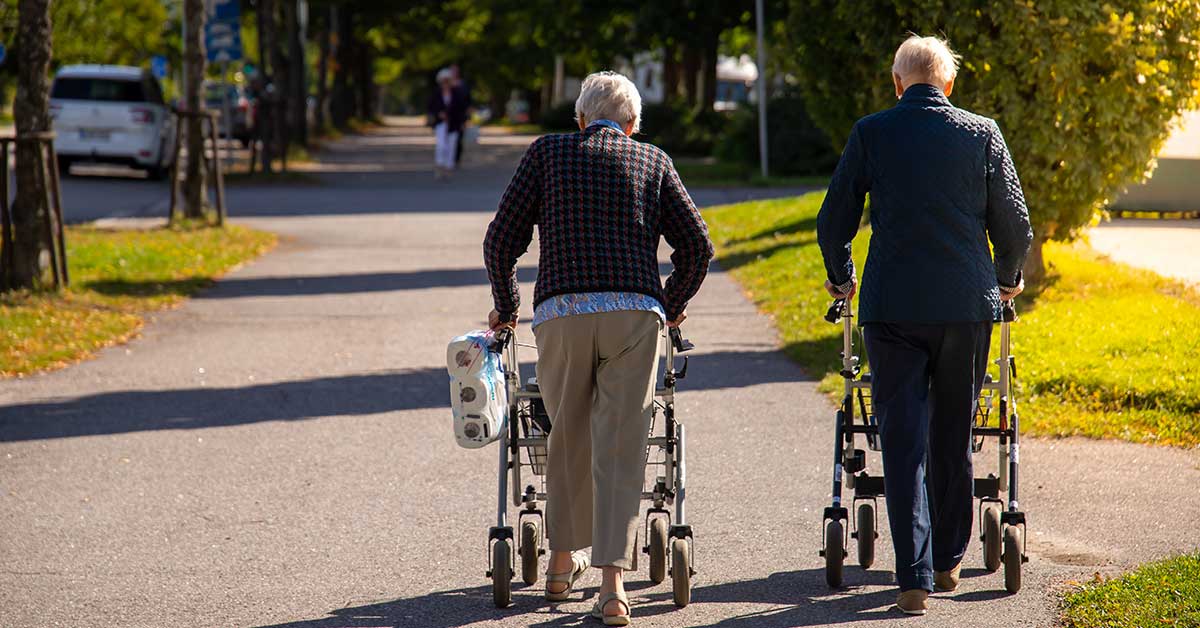
Rollators are the modern walkers frames with four wheels, hand brakes, and usually a built-in seat. They are incredibly popular for good reason: they move smoothly, allow longer-distance walking, and provide an immediate resting spot wherever you are. Ive watched formerly home bound people reclaim their neighborhood sidewalks with a rollator, timing their walks from bench to bench or rather, seat to seat.
But rollators are not just fancy walkers, and treating them that way can cause problems. They roll very easily, which means they can also get away from you if you lean too heavily or forget to use the brakes. Downhill surfaces, ramps, and uneven sidewalks require real attention and hand strength. For people with good cognition, decent hand function, and moderate balance, though, rollators can be a game changer for community independence.
Rollators are perfect when endurance is a primary problem. Someone with heart or lung disease who tires easily can walk, sit, walk, sit, without avoiding outings. Many models have storage bags or baskets, making them mini-transport systems for oxygen tanks, shopping bags, or personal items. For a patient I once worked with who struggled just to cross a parking lot, a rollator turned an anxiety-filled journey into a manageable routine.
Insider Tip (Rehab Physician): I prescribe rollators when I want people to go places. If balance is borderline but their arms and brains can manage brakes, a rollator is freedom with a built-in rest stop.
Canes
Canes are the least intrusive and most socially acceptable of the three, but they are also the most misunderstood. A cane is not a magical stability device; its a helper, not a savior. It gives you a third point of contact with the ground, which can reduce load on a painful joint or add a bit of balance support, but your body still does most of the work. For mild arthritis, minor balance issues, or as a backup when youre mostly steady, canes can be exactly right.
There are different types: standard single-point canes, offset-handle canes, and quad canes with a four-pronged base. Quad canes look more stable but can be heavy and easy to trip on if used incorrectly. I once had a patient who tried to walk inside the frame of a large quad cane like it was a walker. Thats how unnatural it felt to her at first. Once we downsized to a lighter, properly fitted offset cane, her walking improved dramatically.
Canes shine in tight spaces and short trips: bathroom at night, around the kitchen, or short indoor distances in familiar environments. They’re also easier to handle on stairs and in crowded places like restaurants. For people rebuilding confidence after injury or surgery, a cane may be the right middle ground between full independence and full support, especially once they’ve graduated from a walker or rollator.
How to Use a Walker, Rollator, or Cane
Knowing which device to choose is only half the battle. Using it correctly is what keeps you safe. Ive seen beautifully fitted devices become trip hazards because no one ever explained the basics. The good news: the principles are straightforward once you see them broken down.
With a walker:
- Stand inside the frame, not behind it. Your arms should be slightly bent at the elbows.
- Move the walker first, then step into it with your weaker leg, then your stronger leg.
- Keep the walker close; don’t push it far ahead.
- On turns, take small steps and turn your body rather than twisting your back.
With a rollator:
- Always keep at least one hand ready to use the brakes.
- Walk inside the frame, not several inches behind it.
- Use the brakes before you sit or stand from the built-in seat. Engage them fully.
- Avoid sitting on the seat while someone pushes you like a wheelchair most rollators are not designed for transport.
With a cane:
- Hold the cane in the opposite hand from your weaker or more painful leg.
- Move the cane and the weaker leg forward together, then bring the stronger leg through.
- Keep the cane close to your side, not far out in front.
- Make sure the canes rubber tip is in good condition; replace it if its worn smooth.
Insider Tip (Physical Therapist): If using the device feels like you’re wrestling with it, something is wrong height, type, or technique. Five minutes with a clinician can fix what weeks of trial-and-error wont.
How to Get Up From a Chair or Sofa
Most falls Ive seen at home don’t happen on long walks; they happen during transfers especially getting up from soft seats. Chairs and sofas that are low, deep, or soft can trap you. Standing safely with a mobility aid means having a plan before you start.
With a walker or rollator, the safest method is usually:
- Scoot to the edge of the chair so your feet are under your knees.
- Place both hands on the arms of the chair or on the seat beside you not on the walker yet.
- Lean your nose over your toes and push up to standing.
- Once you’re steady on your feet, move one hand at a time to the walker or rollator.
- Then start walking.
For a cane, the principle is similar:
- Scoot to the edge, feet under knees.
- Hold the cane in your stronger hand or set it within reach.
- Push up with both hands on the chair if needed, then grab the cane once you’re upright and stable.
- Take a moment to feel your balance before stepping.
Insider Tip (Home Safety Consultant): If you need help every time you get off the sofa, consider changing the sofa, not just fighting your way out of it. Sometimes a firmer, higher chair and a good mobility aid together solve half the problem.
How to Go Up and Down Stairs
Stairs are where the rules become life-or-death. If your balance is poor or you feel frightened on stairs, the honest answer might be: minimize their use or consider structural changes like ramps or stairlifts. In many homes, combining the right mobility aid with wheelchair or threshold ramps and thoughtful planning is far safer than trying to power through.
If you must use stairs and your clinician has cleared you:
With a cane:
- Going up: Good goes up. Step first with your stronger leg, then the weaker leg and cane together.
- Going down: Bad goes down. Step first with the weaker leg and cane, then bring the stronger leg down to the same step.
- Always use the handrail when available; the cane goes on the opposite side.
With a walker:
- Standard walkers are rarely safe on regular stairs. Sometimes they can be folded and carried, with a rail used for support instead.
- On short single steps, your therapist may teach a special technique, but do not improvise on your own.
With a rollator:
- Rollators should not be used on most staircases. They can sometimes be carefully lifted over a single step or threshold, but on true stairs, they are more risk than help.
- Some people keep one device upstairs and one downstairs to avoid carrying them on the stairs.
How to Get Into and Out of a Car
Cars are where theory meets reality. Getting in and out safely can determine whether you feel comfortable going to appointments, social events, or even quick errands. Ive watched people avoid leaving home simply because the transfer felt terrifying.
Basic approach:
- Position your walker, rollator, or cane next to the car with the door wide open and the seat pushed back if possible.
- Turn so your back is facing the seat. Reach back with one hand to find the seat or door frame.
- Slowly lower yourself, using the car for support not the rolling device.
- Sit first, then pivot your legs into the car.
Getting out is the reverse:
- Pivot legs out facing the open door.
- Scoot to the edge of the seat.
- Place one hand on a stable part of the car and one on the seat.
- Push to stand, then reach for your device once you’re fully upright and balanced.
Insider Tip (Driver Rehabilitation Specialist): If you can afford even one piece of adaptive equipment for the car, a simple swivel cushion or a grab bar that locks into the door latch can drastically reduce your effort and risk.
How to Walk
Walking with a mobility aid looks simple until you watch ten people do it ten different (and sometimes dangerous) ways. The goal is a smooth, predictable pattern that keeps your center of gravity over your base of support.
General walking pattern guidelines:
- Look forward, not at your feet, most of the time. Glance down only to check obstacles.
- Keep the device close; if its too far ahead, you’re chasing it, not supported by it.
- Take smaller steps, especially when turning or on uneven ground.
- Avoid multitasking while walking no texting, rummaging in bags, or twisting around.
If you feel your gait worsening over time, or if pain or fatigue are increasing, that’s a sign to re-evaluate your device or your underlying condition. Sometimes an upgrade from cane to walker, or walker to rollator makes sense. Other times, it means your health needs a closer look, perhaps in combination with services like durable medical equipment in Jacksonville and tailored therapy.
Bringing It All Together: Choosing Whats Right for You
Walkers, rollators, and canes: which mobility aid is right for you? The honest answer is that none of them are right if chosen quickly, for the wrong reasons, or without instruction. But when matched thoughtfully to your safety needs, strength and endurance, environment, and preferences, the right device stops being a symbol of decline and becomes a tool for living.
In my experience, people who thrive are those who:
- Accept that they deserve to be safe, not just tough.
- Choose more support when their body clearly needs it.
- Invest a little time in learning correct use.
- Adjust their home through things like bathroom safety modifications or broader home accessibility solutions instead of fighting bad layouts forever.
- Stay realistic about changes in their condition over time, whether due to age-related mobility decline, chronic illness, or developmental disability supported by programs like the Florida Developmental Disability Waiver.
In the end, the right aid is the one you can and will use consistently, that keeps you out of the emergency room and in the places you actually want to be your favorite café, your grand childs school play, the park bench at sunset. Don’t let pride, fear of looking old, or rushed decisions rob you of that.
If you’re standing at this crossroads, don’t do it alone. Talk with a physical or occupational therapist. Visit a trusted provider whether its a local clinic or a specialist in home medical equipment and hospital beds and mobility devices like Wrightway Medical and actually try different options. Your future self, walking more confidently and falling less, will be grateful you took this decision as seriously as it deserves.