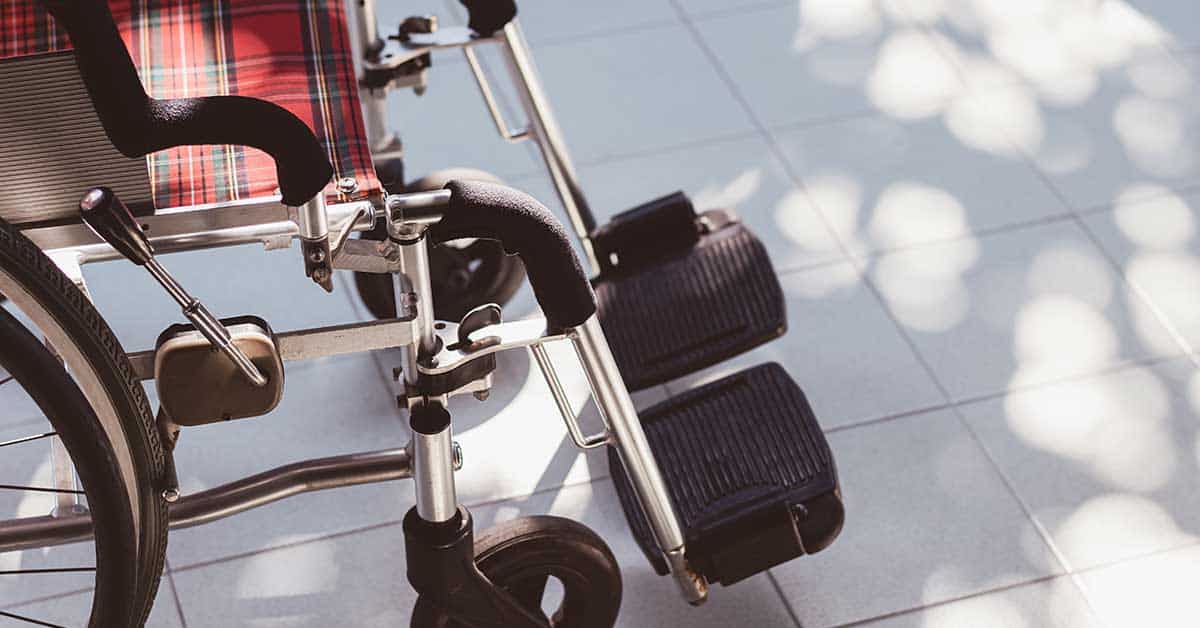
Home medical equipment in Florida isn’t a nice-to-have add-on to VA care; it’s the difference between a veteran living on their own terms and a veteran quietly giving up. If you’re a Florida vet or a caregiver, you already know the system can feel like a maze, and VA benefits for home medical equipment in Florida are only as good as your ability to navigate the paperwork, the providers, and the timing. Too many veterans wait months for a basic adjustable bed or wheelchair ramp while their health — and dignity — slips.
That’s exactly why providers like Wrightway Medical of Florida, which has served the Veterans Affairs community since 2009, matter more than any brochure or policy change. The VA may fund the equipment, but it’s the local HME provider that makes sure it actually shows up, actually fits, and actually works in the real, messy life of a Florida veteran. This page is unapologetically opinionated: if your HME provider can’t speak fluent VA benefits, understand Florida’s climate and housing quirks, and pick up the phone when something breaks, find one that can.
Coverage is the easy line in a policy manual; access is the hard part, lived out in cramped trailers, beachside condos, and multi-story homes built long before accessibility codes. The goal here is simple: lay out what’s new, what’s covered, how to actually get it, and why choosing the right HME provider in Florida can make or break your experience with VA benefits.
VA HME Benefits
Learn which home medical equipment the VA covers in Florida, who qualifies, and the steps to get equipment fast.
- What’s covered: medically necessary durable items — wheelchairs, adjustable beds, oxygen systems, and related supplies — for eligible veterans with service-connected or approved non-service-connected conditions.
- How to access it: locate VA-approved HME suppliers, watch for coverage updates, and verify local provider participation.
- What’s required: a physician order and VA HME forms — submit the required documents and contact your regional Prosthetics/HME or Florida VA office to authorize, schedule, and track delivery.
What’s New
The landscape of VA benefits for home medical equipment in Florida isn’t frozen in time; it changes quietly and constantly, and veterans rarely get a clear announcement when something improves. Updates drip through VA memoranda, new provider contracts, and policy tweaks that only insiders and persistent caregivers notice. Over the last few years, three shifts have meaningfully changed how Florida veterans receive HME: increasing virtualization, tighter coordination with community providers, and slow but real modernization of equipment options.
First, telehealth and remote ordering are no longer optional extras. The VA’s expansion of telehealth, accelerated after 2020, has made it easier for Florida veterans in rural areas — from the Panhandle to the Glades — to get the clinical documentation needed for HME without multiple in-person trips. According to VA telehealth utilization reports, video visits for specialty and primary care have grown severalfold since 2019, and that shift feeds directly into quicker HME authorizations when a provider knows exactly what documentation the local VA facility expects.
New Equipment Standards and Options
Second, there’s been a quiet modernization of what counts as “standard” equipment. A decade ago, veterans were often offered basic manual wheelchairs as the default, even when their lifestyle, shoulder health, or home layout clearly called for powered mobility. Today, powered wheelchairs, scooters, and complex rehab technology are more often treated as medically necessary — if your provider can document it properly and coordinate with VA clinicians.
In Florida, that shift is crucial. The environment punishes equipment: salt air, humidity, sand, and hurricane-season rains are brutal on motors and electronics. Modern, sealed, outdoor-capable devices are no longer luxuries; they’re survival tools, and the right device depends heavily on whether a veteran moves between tile floors, uneven sidewalks, or sand-adjacent parking lots.
Insider Tip: If your HME provider doesn’t ask how far you walk on a typical day, how tight your hallways are, and how often you’re outside in heat or rain, they’re not writing the right justification. The VA isn’t allergic to powered devices — it’s allergic to vague documentation.
Third, the VA has been tightening its partnership with community providers in Florida through more structured contracts and clearer expectations for delivery times, service standards, and preventive maintenance. It sounds bureaucratic, but it matters: providers that know the VA system and have long-standing relationships can cut through the ambiguity that leaves veterans waiting while paperwork bounces between Tampa, Jacksonville, Gainesville, and beyond.
HME Provider Locator
Most veterans discover HME providers by word of mouth — “call this guy, he actually shows up.” That’s useful but incomplete. To leverage VA benefits for home medical equipment in Florida, you don’t just need any provider; you need one recognized or contracted by the VA, familiar with Florida Medicaid intersections if you’re dual-eligible, and logistically capable of serving your specific area. Wrightway Medical, for example, serves both the Jacksonville and Tampa regions — two very different Florida metros, Jacksonville with its sprawling geography and older housing stock, Tampa with its mix of condos, retirement communities, and flood-prone neighborhoods.
When locating an HME provider, look for three specific, often-overlooked signals:
- Do they understand veteran-specific programs? Ask bluntly: “How often do you work with VA authorizations?” Hesitation isn’t a good sign. Companies used to handling VA scripts know the acronyms, the workflows, and the local VA facility contacts.
- Can they support both durable and consumable supplies? Veterans rarely need just an adjustable bed or just a wheelchair — they also need incontinence products, wound care supplies, and oxygen supplies. Providers like Wrightway that offer consumable supplies in the Jacksonville and Tampa areas can simplify life dramatically by coordinating recurring shipments and reauthorizations.
- Do they offer transparent service boundaries? The right provider doesn’t pretend to cover all of Florida without limits. A good partner clearly states where they can deliver reliably and how they coordinate if you’re in a more rural or remote area.
Insider Tip: Before you commit, ask: “What’s your average delivery time for VA-authorized equipment in my county?” If they can’t answer with a range and a real example, be cautious.
About HME
Home medical equipment is a deceptively bland term for deeply personal, life-defining tools. It covers everything from adjustable beds and walkers to powered wheelchairs, oxygen concentrators, bathroom safety devices, and specialized mattresses. For veterans in Florida, HME often does double duty: it must support chronic conditions (like COPD, diabetes, or spinal injuries) and Florida-specific challenges such as hurricane-season evacuations, extreme heat, and power outages.
Florida’s climate rewrites the rules of HME. Oxygen concentrators can fail in the middle of a heat wave when no one anticipated how hot a small, older home gets after the AC falters. Scooter ramps in manufactured-home communities warp when heavy rain hits, turning a safe incline into a slippery hazard. These aren’t theoretical concerns; they’re survival checklists.
From a VA perspective, HME is usually categorized as Durable Medical Equipment (DME) — items that can withstand repeated use, are primarily for medical purposes, and are appropriate for home use. Translated into daily life, that’s the equipment you rely on to breathe, to move, to bathe without falling, to sleep without pain, and to leave the house without risking another injury.
Historically, HME for veterans was handled through a mix of VA medical-center warehouses and local contracted vendors. Over time, the VA has shifted toward regional contracts and community partnerships, especially in states like Florida with distributed veteran populations and significant rural pockets. That’s why a Florida-based provider that understands both VA requirements and local realities is so critical — a provider that’s brilliant in Minnesota may have no idea how to manage mold risk in a coastal Florida home with a chronic respiratory patient.
Insider Tip: If you use oxygen or CPAP in Florida, your provider should talk to you about humidity and mold, not just liters per minute and mask size. The equipment is only half the story; the home environment is the other half.
HME and Supplies Benefits
Here’s the part too many veterans miss: VA benefits for home medical equipment in Florida are broader than most people realize — but only if you push for what you truly need, not just what’s routinely offered. The VA’s prosthetics and sensory aids service, along with primary and specialty clinics, can authorize everything from basic walkers to complex rehab chairs, home oxygen systems, and even home modifications in some cases through ancillary programs.
The catch is that benefits are unlocked by documentation and justification, not by how obviously a veteran is struggling. Consider a Vietnam veteran whose falls had become so frequent that his daughter stopped working full-time to watch him — and who had been given only a basic cane. Only when a savvy local HME provider walked through his home, documented the cramped hallways, his knee instability, and his cardiac issues, and communicated that systematically to the VA did he get a properly fitted rolling walker and a safer bathroom setup.
VA benefits typically cover:
- Durable Medical Equipment (DME): adjustable beds, wheelchairs, scooters, walkers, lifts, commodes, and more.
- Respiratory equipment: oxygen concentrators, nebulizers, CPAP/BiPAP machines.
- Orthotics and prosthetics: braces, prosthetic limbs, specialized footwear.
- Supplies: incontinence supplies, wound care dressings, some diabetic supplies, and other recurring items.
Florida’s veterans sometimes also intersect with other programs, like Medicaid waivers or state disability services — useful context especially for younger veterans or those with complex, lifelong conditions. The real advantage comes when a provider recognizes the “stacking” of benefits: VA as primary for service-connected needs, Medicaid or private insurance as supplementary, and sometimes state or nonprofit programs filling gaps. An experienced company like Wrightway can sometimes coordinate across those lines, so a veteran isn’t told “no” simply because the first clerk they spoke to didn’t know how two programs fit together.
Insider Tip: Never assume “not covered” is the final word. Ask: “Is this not covered at all, or not covered this way? Is there another program or code we should be looking at?” Good HME providers phrase that question for you in language the VA understands.
One more hard truth: speed is a benefit. Coverage that takes six months to turn into a usable wheelchair isn’t truly a benefit. That’s where a veteran-savvy Florida provider becomes a force multiplier — they know which VA clinics are quicker, which documentation gets approvals, and how to push back, professionally, when necessary.
HME and Supplies Providers
Not all HME providers are created equal, and Florida veterans don’t have time to audition mediocre companies. The provider you choose determines not just what equipment you receive, but how safely and confidently you can use it. A provider like Wrightway Medical, which has spent over a decade in Florida working directly with the VA community, starts with an advantage: institutional memory of what works, what doesn’t, and how to navigate the quirks of the system.
When evaluating providers, look beyond generic promises:
- VA experience and relationships. Ask directly how long they’ve served VA patients in Florida, and in which regions. A genuine local presence in regions like Jacksonville and Tampa signals operational investment, not just marketing.
- Breadth of equipment and supplies. An ideal provider handles both your durable equipment and your ongoing supplies — streamlining everything from incontinence-product deliveries to wound care shipments.
- Education and follow-through. A wheelchair delivered to a Florida home with tight doorways and uneven thresholds is a hazard if no one checks clearances or trains the user. A proper provider performs in-home assessments, provides training, and follows up after installation. If they simply drop a box at the front door, they’re a shipper, not a partner.
Better implementation alone can transform a veteran’s life. A power chair that a veteran had abandoned — because he kept getting stuck trying to exit his home past a squared-off porch post — became usable again once a field tech adjusted the chair’s turning speed, repositioned the armrests, and suggested a simple, low-cost porch modification. No new benefit; just better setup, and his world expanded from his living room to his neighborhood in a single afternoon.
Insider Tip: If a provider doesn’t insist on seeing how you actually move through your space, they’re guessing. Equipment has to fit your body and your home, not just a catalog spec sheet.
HME and Supplies Forms
For many Florida veterans, forms are the real enemy, not the illness or injury. VA authorizations for HME require a choreography of clinical notes, prescriptions, justification letters, and sometimes photographs or measurements. The process can feel opaque, but it doesn’t have to be impossible if you understand the moving parts and have a provider who treats paperwork as part of the care, not a separate inconvenience.
Most HME journeys follow a similar path:
- Clinical evaluation. A VA or community clinician (often physical therapy, occupational therapy, primary care, or a specialist) documents your functional limitations and medical need for specific equipment.
- Prescription and justification. The clinician writes a prescription and a narrative justification. Generic phrases like “needs wheelchair for mobility” can delay your case, whereas detailed statements like “cannot ambulate more than 10 feet without rest due to COPD and heart failure; home layout requires powered mobility to safely access bathroom and kitchen” move things along.
- Submission and authorization. The VA’s prosthetics or equipment department reviews the request, matches it to policy, and authorizes equipment through a contracted provider.
- Provider coordination. The chosen provider then handles ordering, delivery, setup, and training.
Where do forms blow up? Usually at the justification step, which is why it helps to work with providers who guide clinicians on what belongs in the chart. Payers, including the VA, want to see clear, objective criteria met.
Insider Tip: Show up to your appointment with a written list: how far you can walk, how many times you fall in a month, which daily activities you struggle with. The more concrete your examples, the stronger the documentation in your chart — and the better your HME request looks.
For Florida veterans juggling multiple programs (VA plus Medicaid, for example), the forms multiply, but so do the options. A seasoned provider like Wrightway Medical can often pre-populate intake forms with VA-friendly language and ensure that when the clinician signs, the narrative aligns with policy requirements. The harsh reality is that many denials are preventable — they happen not because the need wasn’t real, but because the form didn’t explain that need in the right terms. The right provider doesn’t just hand you forms; they translate your lived reality into language that unlocks equipment.
Contact Us
If you’ve read this far, you’re probably not casually browsing. You’re a Florida veteran, a family member, or a clinician tired of watching people fall through the cracks. The next step isn’t another search; it’s a conversation with a provider who understands VA benefits for home medical equipment in Florida and has spent years in the trenches with the VA community.
Wrightway Medical has served Florida veterans since 2009, and that history shows up in the details: knowing which local VA facilities move faster on certain requests, understanding how Florida’s humidity affects particular devices, and recognizing that a veteran’s home is not a generic floor plan. Whether you’re in Jacksonville, Tampa, or elsewhere in Florida, reaching out lets the team assess your situation, explain what’s realistically possible under your benefits, and map a path from “I think I’m eligible for something” to “the equipment is in my home and I know how to use it.” You shouldn’t have to become an expert in HME policy just to get a wheelchair that fits through your doorway or an oxygen concentrator that won’t fry in August. If a past attempt left you discouraged, treat that as a failed process, not a final verdict on your eligibility.
Insider Tip: Reframe it from “bothering the provider” to “using my benefits.” Families who make that shift — and work with a team that actually picks up the phone — are often the ones who finally get equipment that’s been needed for years.
Conclusion: Don’t Settle for Bare-Minimum Benefits
The blunt truth: VA benefits for home medical equipment in Florida can be powerful, but only if you refuse to settle for the bare minimum and choose a provider that fights alongside you rather than against the clock. Policy manuals don’t haul an adjustable bed up your stairs. Online portals don’t teach you to safely use a lift in a narrow hallway. People do. And in Florida — with its heat, storms, and sprawling geography — you need people who understand both veteran culture and this state’s harsh realities.
Wrightway Medical has spent since 2009 earning the trust of Florida’s VA community not by promising miracles, but by mastering the unglamorous work of paperwork, logistics, and in-home problem-solving. If you’re a veteran or caregiver here, you don’t just need HME; you need the right HME, delivered the right way, under the benefits you’ve already earned. Don’t let a confusing form, a vague denial, or an indifferent provider be the final word. Reach out, ask specific questions, demand specific solutions, and work with a team that knows how to turn your VA benefits into real, tangible tools for living on your own terms.
FAQs
Who can get VA benefits for home medical equipment in Florida? Eligible veterans and some dependents can receive VA home medical equipment in Florida when they meet the VA’s medical-need and eligibility criteria.
What home medical equipment does the VA cover in Florida? The VA covers medically necessary durable medical equipment such as wheelchairs, adjustable beds, oxygen systems, and mobility aids.
How do veterans apply for VA home medical equipment in Florida? By contacting their local VA medical center or care team and submitting a clinical request with supporting medical documentation.
Will the VA deny home medical equipment claims in Florida? The VA can deny claims if equipment isn’t medically necessary or documentation is incomplete, but veterans may appeal and supply additional evidence.
When will the VA approve home medical equipment in Florida? Timelines vary, but decisions often occur within weeks to a few months, depending on clinical review and supply availability.
What documentation is needed for VA home equipment in Florida? Generally a VA clinician’s prescription or justification, recent medical records, and any residency information the VA requires.