
Resources for Physicians
When your patients need home modifications or durable medical equipment covered by Florida Medicaid waiver programs, proper documentation of medical necessity makes the difference between approval and denial.
Let’s Start the Conversation
We make it easy to get accurate quotes for your clients' medical equipment and services throughout Florida. Whether you're coordinating Medicare or Medicaid coverage, simply complete the form and our team will respond shortly. We're here to streamline the process so you can focus on your clients.
- 727-577-7544
- 877-419-3545
- contactus@wrightway-medical.com
- 2909 47th Ave N. St. Petersburg, FL 33714
FAQs
How do you communicate with our office if additional documentation is needed?
We contact your office directly via your preferred method—phone, fax, or email—with specific requests explaining exactly what’s needed. No vague “additional documentation required” messages. We tell you precisely which codes, notes, or letters will resolve the issue so your staff can respond quickly.
What goes on a prescription for incontinence supplies?
- Patient’s name, address, DOB
- underlying condition(s) (the primary ICD-CM code).
- the type of incontinence (the secondary ICD-CM code)
- Quantity
- Description of item (Diaper, Pull-up, Liner)
- Refills
- Signature of prescriber
- NPI Number
- Prescriber Name
What documentation is required beyond diagnosis codes?
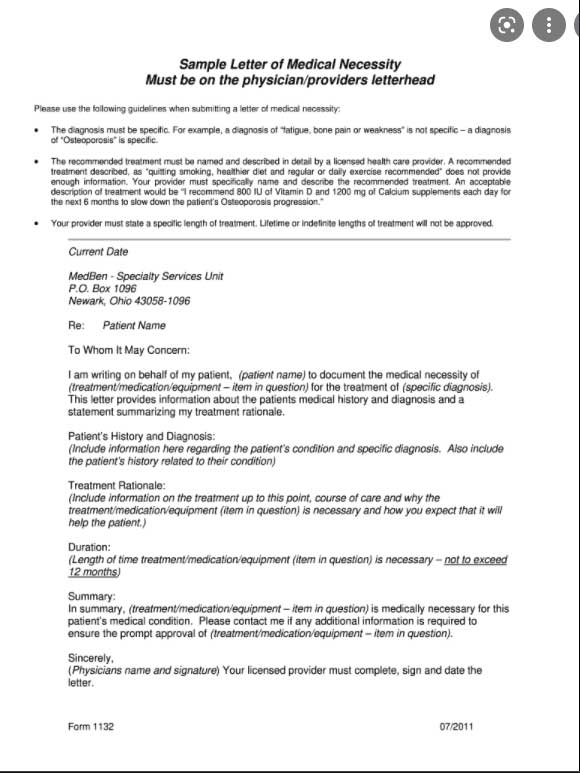
Sample Letter of Medical NecessityWaiver programs typically require a signed prescription or order specifying the equipment or modification, diagnosis codes supporting medical necessity, and brief clinical notes describing how the patient’s condition creates the functional limitation the equipment addresses. For complex equipment like power wheelchairs or major home modifications, a letter of medical necessity may be required. We provide templates that include the specific language reviewers look for.
Which diagnosis codes result in the highest approval rates?
Diagnostic CodesCodes that clearly document functional limitation and medical necessity get approved most consistently. Primary diagnoses like paraplegia, MS, or Parkinson’s are straightforward. For patients with less specific conditions, pairing a primary diagnosis with secondary codes like difficulty walking, history of falling, or muscle weakness strengthens the case. We can provide code recommendations specific to your patient’s situation—complete the form above.