I work for the Angelus up in Hudson, Florida. We have been using Wrightway for over 15 years. I highly recommend using them for any of your medical needs you might have.

A kitchen designed for a standing adult stops working the moment someone sits down to use it. The coffee mugs are on a shelf a wheelchair user can't reach. The sink is locked inside a cabinet that won't accept a knee underneath. The cabinet handles require a pinching grip that arthritis doesn't allow. For a veteran in Temple Terrace managing life from a power chair after discharge from James A. Haley VA, a grandmother in Lutz with rheumatoid arthritis, or a husband in Westchase relearning daily tasks after a stroke at BayCare St. Joseph's, the kitchen is where lost independence hits hardest. Wrightway Medical's C.E.A.C. certified team modifies kitchens throughout Tampa Bay to put that independence back within reach. We've been doing this work for over 30 years.

Hillsborough County’s kitchens span every design era and layout type. Small galley kitchens in Seminole Heights and Tampa Heights bungalows barely fit a turning wheelchair—modifications have to maximize accessibility within tight footprints rather than expanding the space. Mid-century kitchens in Carrollwood, Temple Terrace, and Seffner tend to have closed floor plans with walls separating the kitchen from adjacent rooms, limiting access paths. Newer open-concept kitchens in Riverview and Fish Hawk offer more space but often include islands with standing-only heights that block wheelchair users from the primary work area. Florida’s concrete slab construction adds another factor—any modification that involves plumbing relocation requires cutting into the slab, and the work needs to be done right the first time.
As an ACHC-accredited provider with C.E.A.C. certified professionals, Wrightway Medical designs and installs kitchen accessibility modifications throughout Hillsborough County and the greater Tampa Bay area. We work directly with Medicare, Medicaid, and Florida’s waiver programs—including iBudget, CDC+, and SMMC-LTC—and handle all assessment documentation, permitting, and insurance coordination. Discharge planners at Tampa General, case managers at the James A. Haley VA, and support coordinators at Senior Connection Center refer to us because we design modifications around how the kitchen will actually be used—not a generic formula applied to every home.

We deliver and service a complete range of home medical equipment throughout the Tampa Doorway Kitchen Accessibility Modifications area:
Standard kitchen countertops sit 36 inches off the floor—an impossible work height for someone using a wheelchair, whose comfortable reach is closer to 30 to 32 inches. Lowering counter sections brings work surfaces down to wheelchair-accessible heights without turning the entire kitchen into a single-user space.
We install lowered countertop sections integrated into the existing layout so the kitchen still functions for standing household members. For a family in Fish Hawk where a wheelchair-using teenager wants to help prepare dinner, or a couple in Seffner where one partner uses a wheelchair and the other doesn’t, a mixed-height counter layout serves everyone without forcing either user to accommodate the other. Lowered sections can also be designed with open knee clearance underneath, turning the counter into a functional workstation where the individual can pull up, prep food, roll dough, or eat a meal at counter height from a seated position. Surface materials are matched to the rest of the kitchen so the modification looks intentional, not institutional.
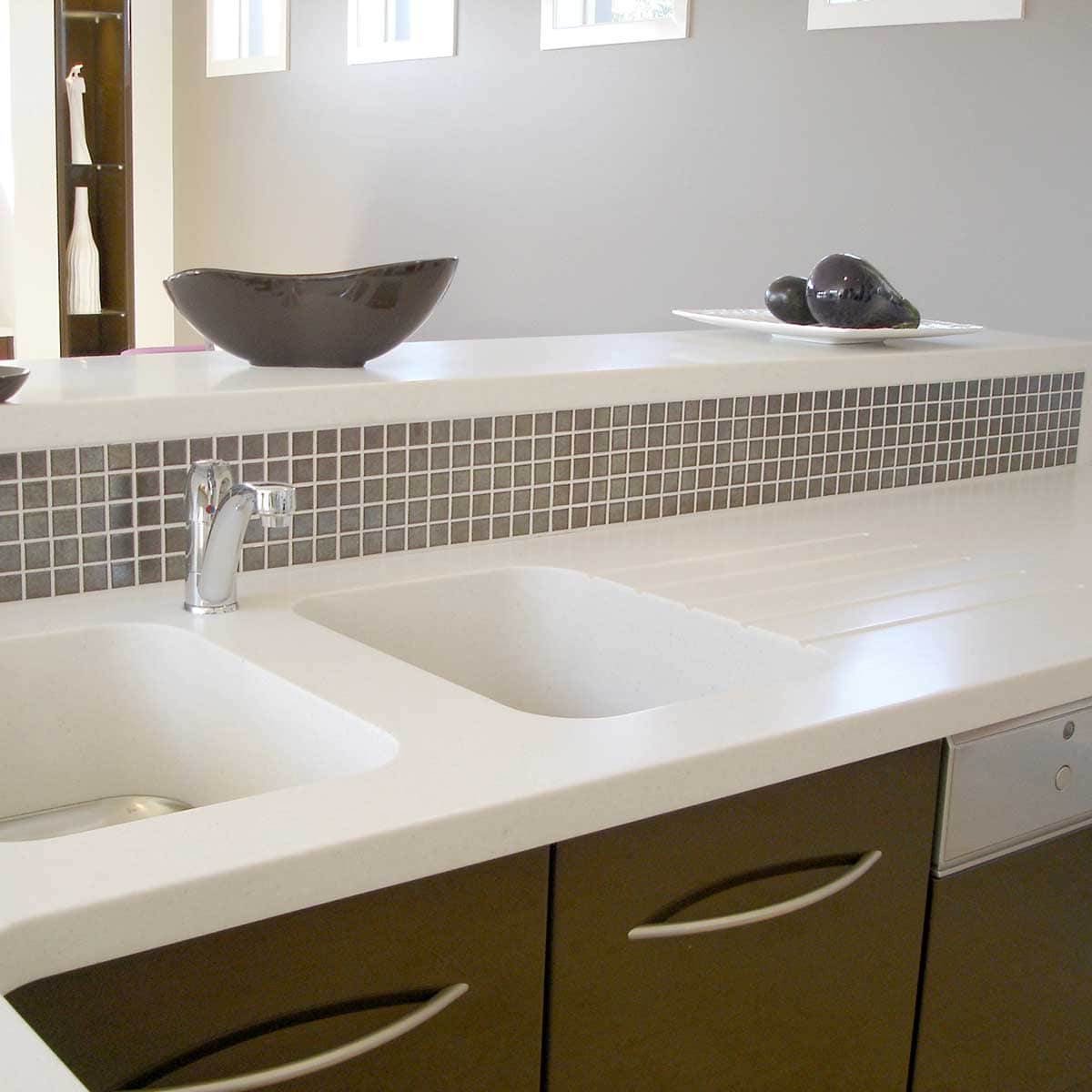
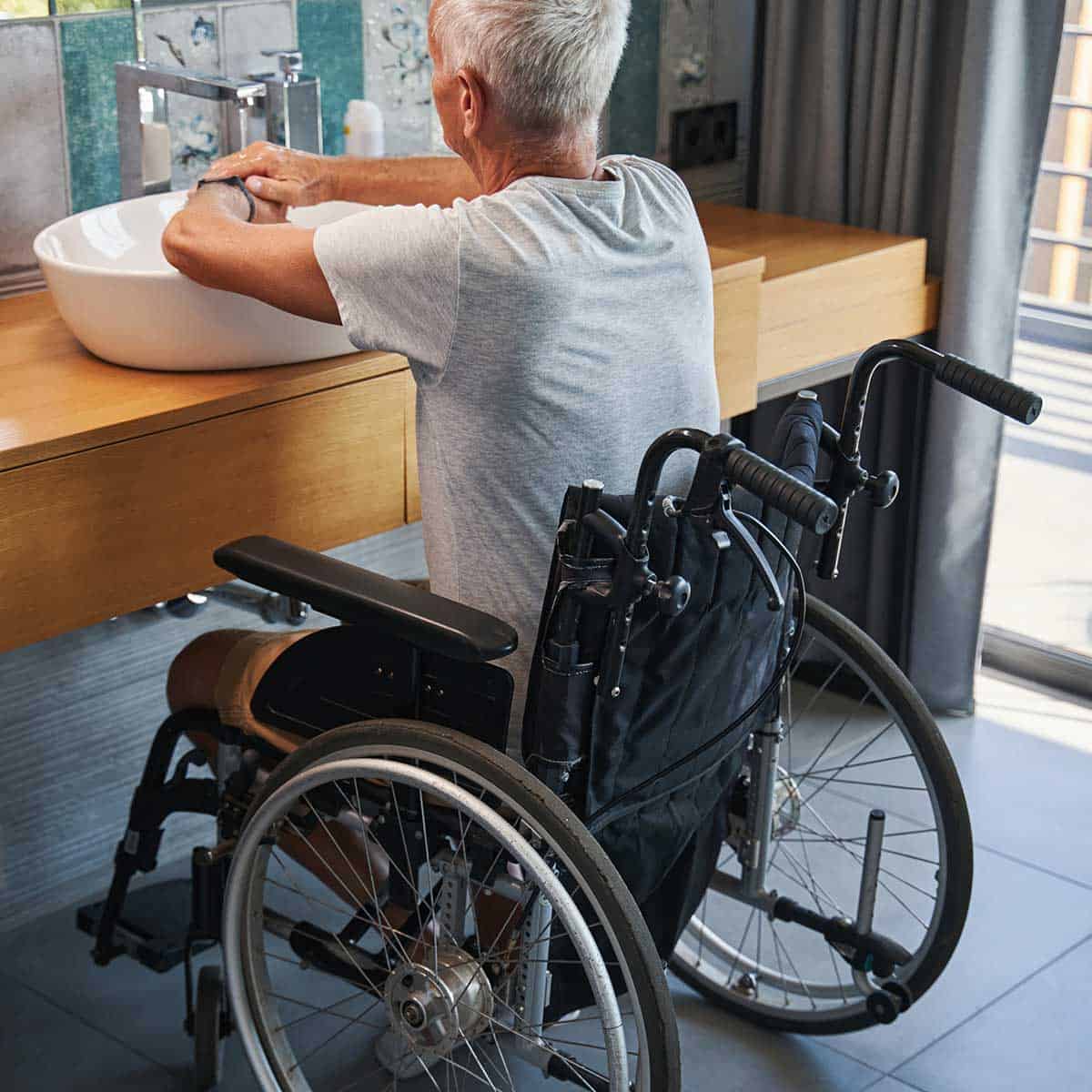
Standard kitchen sinks are enclosed in base cabinets that completely block wheelchair approach. A roll-under sink removes the cabinet face and provides knee clearance so a wheelchair user can pull up directly to the basin. For many households, this single modification has the biggest day-to-day impact of any kitchen change.
We install roll-under sink configurations with insulated hot water and drain pipes to protect knees and thighs from burns, lever-style or touchless faucets positioned within comfortable seated reach, and cabinet modifications that preserve usable storage elsewhere in the kitchen. For a wheelchair user who couldn’t previously wash their hands, rinse produce, fill a glass of water, or clean a dish without assistance, a roll-under sink restores independence on dozens of daily tasks. Installation in Tampa-area homes typically involves some plumbing relocation—and because most Hillsborough County homes sit on concrete slabs, our team handles the slab work with the precision the job requires.
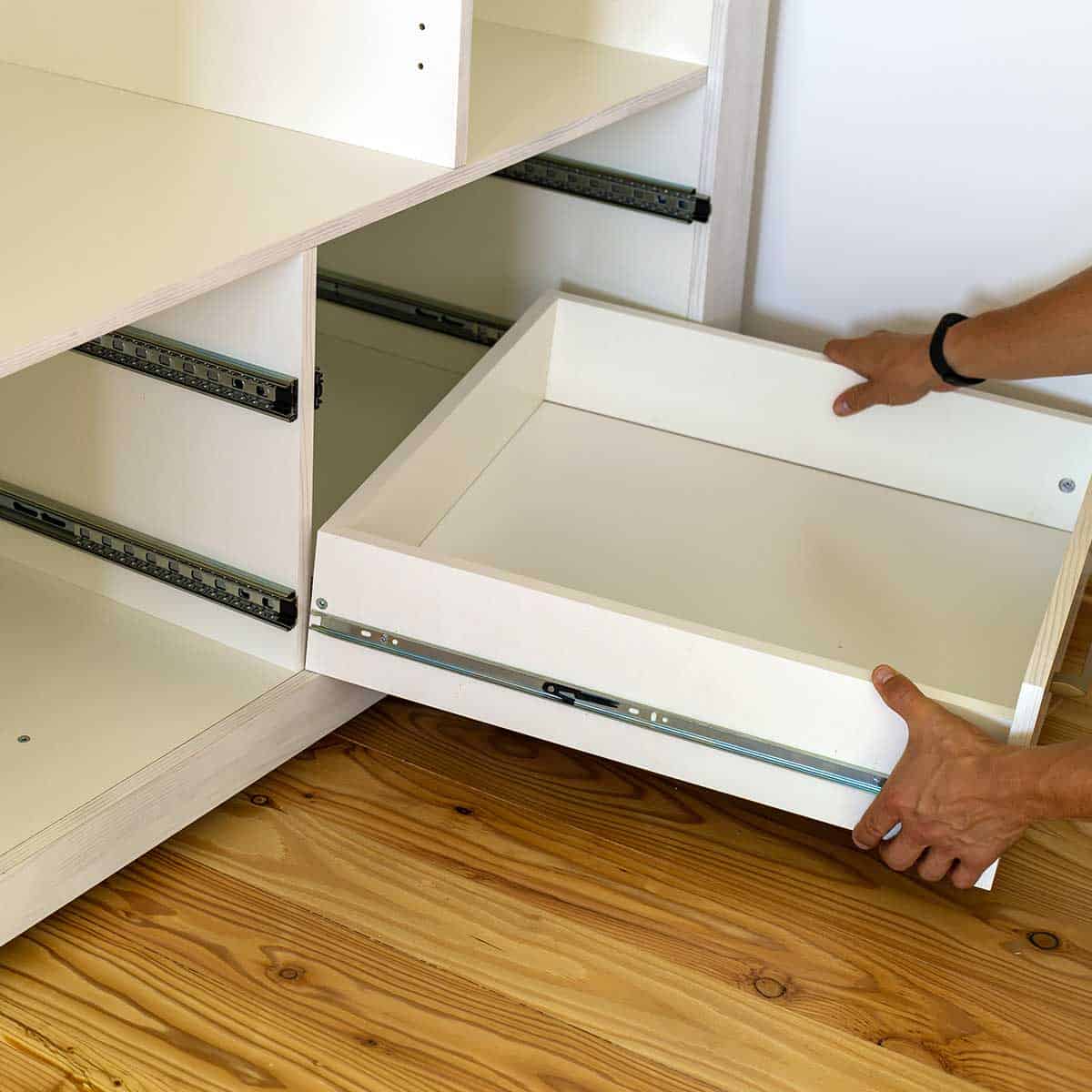
Deep base cabinets become dead storage for anyone with limited reach, mobility, or the ability to bend. Items pushed to the back disappear for practical purposes—and reaching into a deep cabinet from a wheelchair or walker isn’t safe anyway.
We install pull-out shelves that bring the full depth of the cabinet forward, making every stored item visible and reachable from a seated or standing position. Lazy susans in corner cabinets rotate contents to the front rather than requiring someone to lean into awkward angles. Pull-down shelf systems in upper cabinets bring high-shelf items down to eye level without ladders or step stools. For an older adult in Apollo Beach managing daily meals from a walker, a caregiver in Northdale organizing a kitchen around someone with limited mobility, or a wheelchair user in Lithia who needs the full storage capacity of the existing cabinets, these modifications turn unusable storage into functional space without gutting the kitchen.
Standard cabinet knobs and handles require a pinching grip and twisting motion that many individuals simply can’t perform—people with arthritis, hand weakness from stroke, Parkinson’s tremors, or neurological conditions affecting fine motor control. The cabinet stays shut. The kitchen stays locked.
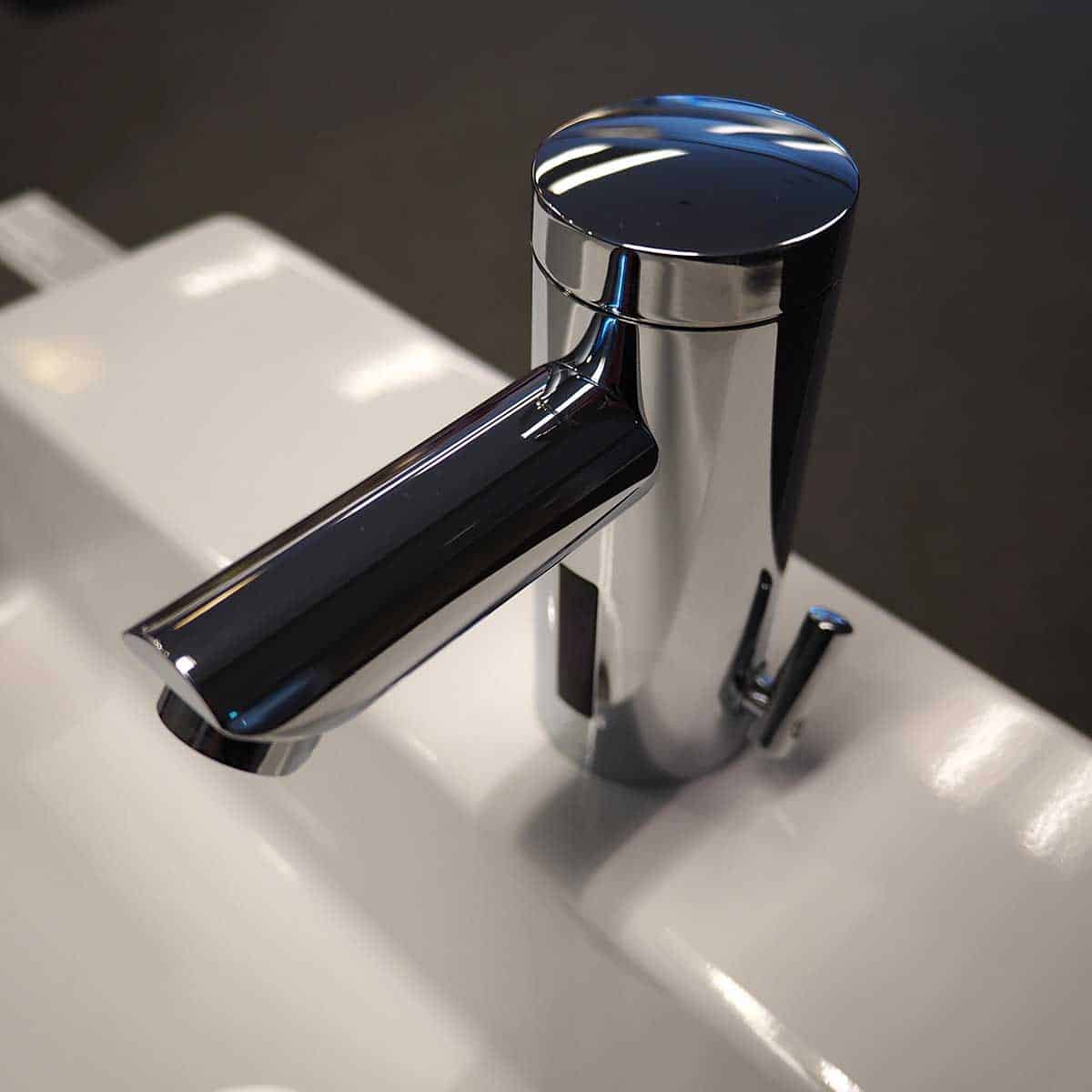
Lever handles, D-pulls, and touch-latch mechanisms replace standard hardware with options that can be operated with a closed fist, the side of a hand, or minimal finger pressure. Touchless or single-lever faucets eliminate the grip, rotation, and temperature-control demands of standard faucets, and reduce the risk of burns from misadjusted hot water—particularly important for individuals with tremors or limited fine motor control. For someone managing Parkinson’s in a Town ‘n’ Country home, a resident in Gibsonton recovering from a stroke that affected hand function, or an older adult in Citrus Park whose grip strength has declined with age, hardware changes are relatively inexpensive compared to other kitchen modifications and have outsized impact on daily independence.
Every kitchen modification project starts with understanding how the individual actually uses the kitchen—which tasks matter most, what mobility equipment they rely on, what their reach and grip allow, and what the space physically accommodates. Without that assessment, modifications end up designed for a hypothetical user rather than the real one.
Our C.E.A.C. certified team visits the home, measures the kitchen in detail, observes the individual or caregiver moving through the space with actual mobility equipment, and identifies the modifications that will have the most impact on daily independence. For individuals on Florida Medicaid waiver programs, we complete the Environmental Accessibility Assessment documentation with the specificity iBudget, CDC+, and SMMC-LTC each require for authorization. Support coordinators across Hillsborough County refer to us because our assessments capture what’s actually needed rather than submitting generic modification requests that get denied or modified in review. Hillsborough County permitting and inspection coordination are handled by our team throughout.

We provide delivery and services throughout the Tampa Doorway Kitchen Accessibility Modifications area including:
I work for the Angelus up in Hudson, Florida. We have been using Wrightway for over 15 years. I highly recommend using them for any of your medical needs you might have.
In my experience, Wrightway has an amazing staff that provides excellent service and care to each and every client. They are dedicated, reliable, and professional. I highly recommend them.

The wonderful people at Wrightway Medical really care about their clients. Their products and services are top notch. I highly recommend this company!
The ADA standard for residential accessibility is 36 inches of clear passage width—measured from the face of the open door to the opposite door stop, not just the rough opening size. Most standard wheelchairs require 32 inches minimum to pass through, but 36 inches allows comfortable passage without scraping hands, arms, or wheelchair components against the frame. Power wheelchairs and bariatric chairs may need the full 36 inches or slightly more. During our assessment, we measure both the doorway and the specific mobility equipment being used to ensure the modification provides adequate clearance for that individual.
Full doorway widening involves relocating door framing within the wall to create a physically larger opening—typically bringing a 30-inch doorway to 36 inches or more. Offset hinges replace standard door hinges with hardware that causes the door to swing completely clear of the frame when open, gaining approximately two additional inches of usable clearance without structural work. For a doorway that needs to go from 30 inches to 32 inches, offset hinges solve the problem in an hour. For doorways that need to reach 36 inches from a starting width of 28 inches, full widening is required. Our C.E.A.C. certified team measures each doorway and each piece of equipment before recommending one approach over the other.
Yes. We work with Florida’s Medicaid Waiver programs—including iBudget, CDC+, and SMMC-LTC—and complete the Environmental Accessibility Assessments required to document and support authorization for home modifications. We also work with Area Agency on Aging plans and Children’s Medical Services. Our team submits complete documentation the first time to minimize authorization delays. If you’re unsure what coverage applies, we’ll walk you through your options.
Structural modifications—particularly widening openings in load-bearing walls or masonry block walls—typically require building permits and inspection. Non-structural changes like offset hinge installation and minor trim work generally do not. Our team determines what permits are needed during the assessment phase and handles all application and inspection coordination through Hillsborough County. Families and support coordinators don’t need to manage the permitting process separately.
Free Consultation
Ready to talk about what you need? Whether you're a family member researching options, a support coordinator looking for a reliable provider, or a physician who needs a responsive DME partner, we're here to help.
We'll discuss your situation, answer your questions, and figure out the best path forward—no pressure, no sales pitch. Just honest guidance from a team that's been helping Florida families since 1995.