In my experience, Wrightway has an amazing staff that provides excellent service and care to each and every client. They are dedicated, reliable, and professional. I highly recommend them.
Kitchens are designed for standing adults—and that design assumption breaks down the moment someone starts using a wheelchair, loses reach and grip strength, or can no longer stand comfortably for the time it takes to prepare a meal. For a Jacksonville resident returning home from UF Health Jacksonville after a spinal cord injury, a veteran managing daily life from a wheelchair after discharge from Naval Hospital Jacksonville, or a family in Mandarin helping a parent stay independent in their own home—a kitchen that hasn't been modified stops being a place of independence and becomes a source of daily frustration and risk. Wrightway Medical's C.E.A.C. certified team designs and installs kitchen accessibility modifications throughout Duval County that allow individuals to prepare meals, access storage, and use appliances safely and independently. We've been doing this work across Northeast Florida for over 30 years.
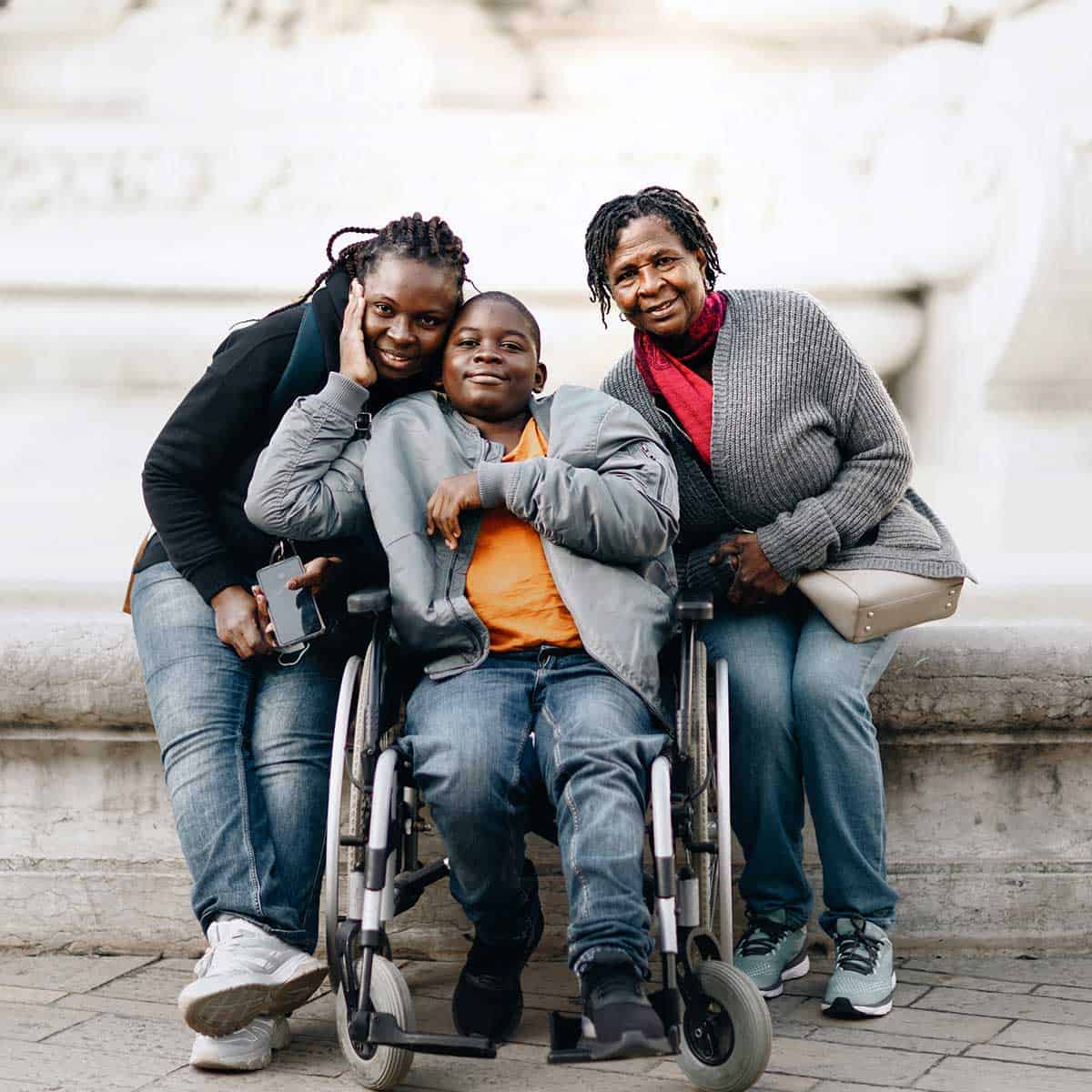
Jacksonville is the largest city by land area in the contiguous United States—a sprawling, consolidated city-county with a population approaching 1 million across Duval County. The housing stock here spans enormous variety: compact galley kitchens in historic Riverside and Avondale bungalows, mid-century kitchen layouts in Arlington and Fort Caroline ranches designed around standing-height work surfaces, open-plan kitchens in newer Nocatee and Baymeadows construction that offer more modification flexibility, and everything in between. Every kitchen presents its own set of structural and layout constraints, and Jacksonville’s range of housing eras means our team regularly works in spaces that require creative problem-solving alongside straightforward modifications. We understand what each type of Jacksonville home requires and how to design modifications that work within its specific structure.
As an ACHC-accredited provider with C.E.A.C. certified professionals, Wrightway Medical designs and installs kitchen accessibility modifications throughout Duval County and the greater Jacksonville area. We work directly with Medicare, Medicaid, and Florida’s waiver programs—including iBudget, CDC+, and SMMC-LTC—and handle all assessment documentation, permitting, and insurance coordination so families and support coordinators aren’t managing that process separately. We service every installation throughout its lifetime.

We deliver and service a complete range of home medical equipment throughout the Jacksonville Kitchen Accessibility Modifications area:
Standard kitchen countertops are built at 36 inches—the right height for a standing adult, and completely inaccessible from a seated position. From a wheelchair, a standard countertop puts work surfaces above comfortable reach and makes food preparation physically demanding or impossible for extended tasks.
Lowered countertops bring work surfaces down to 28–34 inches, depending on the individual’s seated height, wheelchair dimensions, and the specific tasks they need to perform. Our team evaluates each kitchen’s existing cabinet and countertop configuration, designs a lowered section that preserves as much existing cabinetry as practical, and installs work surfaces that support safe and comfortable food preparation from a seated position. We design lowered sections with the individual’s specific wheelchair and reach profile in mind—not a generic accessible height that may not work for them. Modifications are finished to match existing kitchen aesthetics so the result looks like a thoughtful kitchen design, not a medical retrofit.
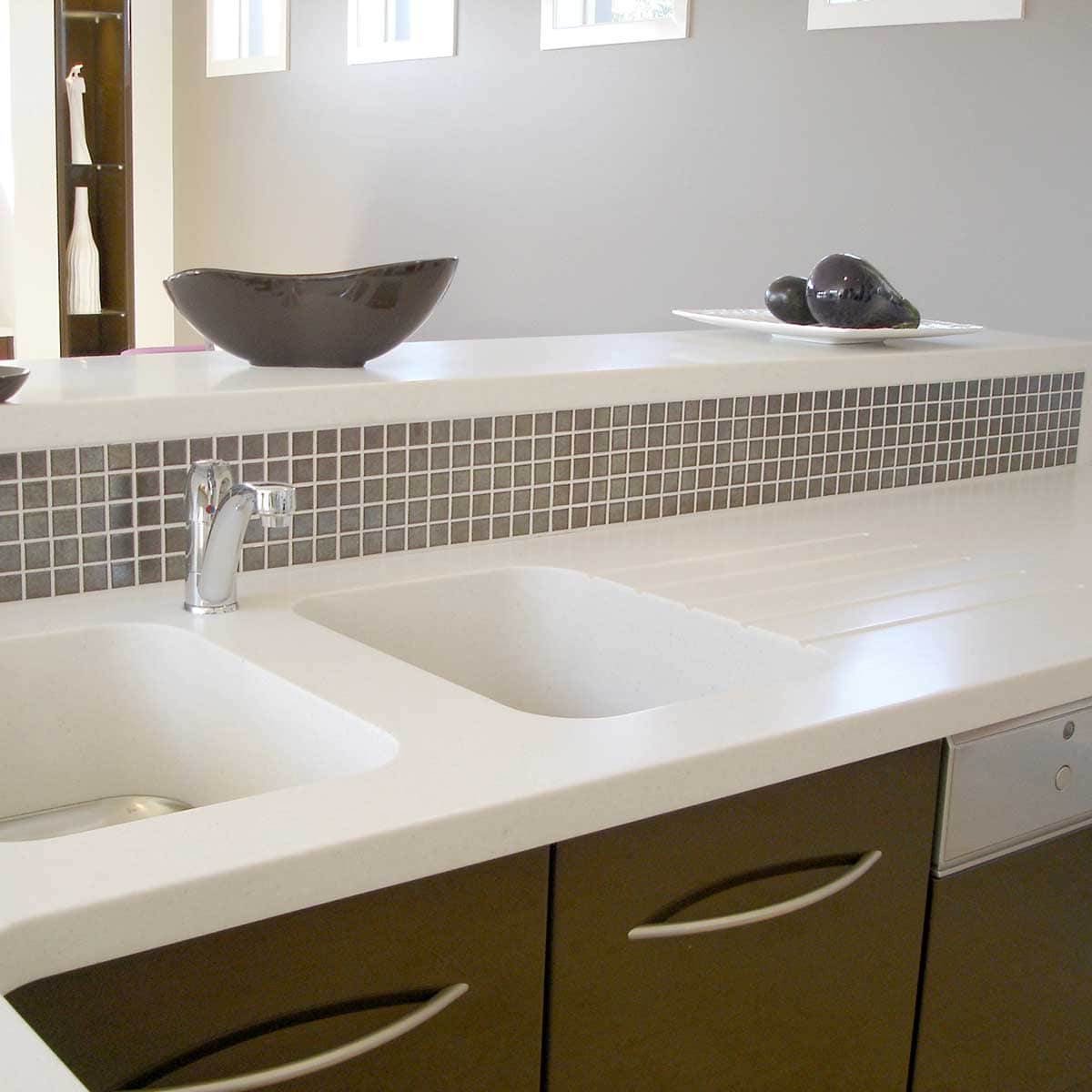
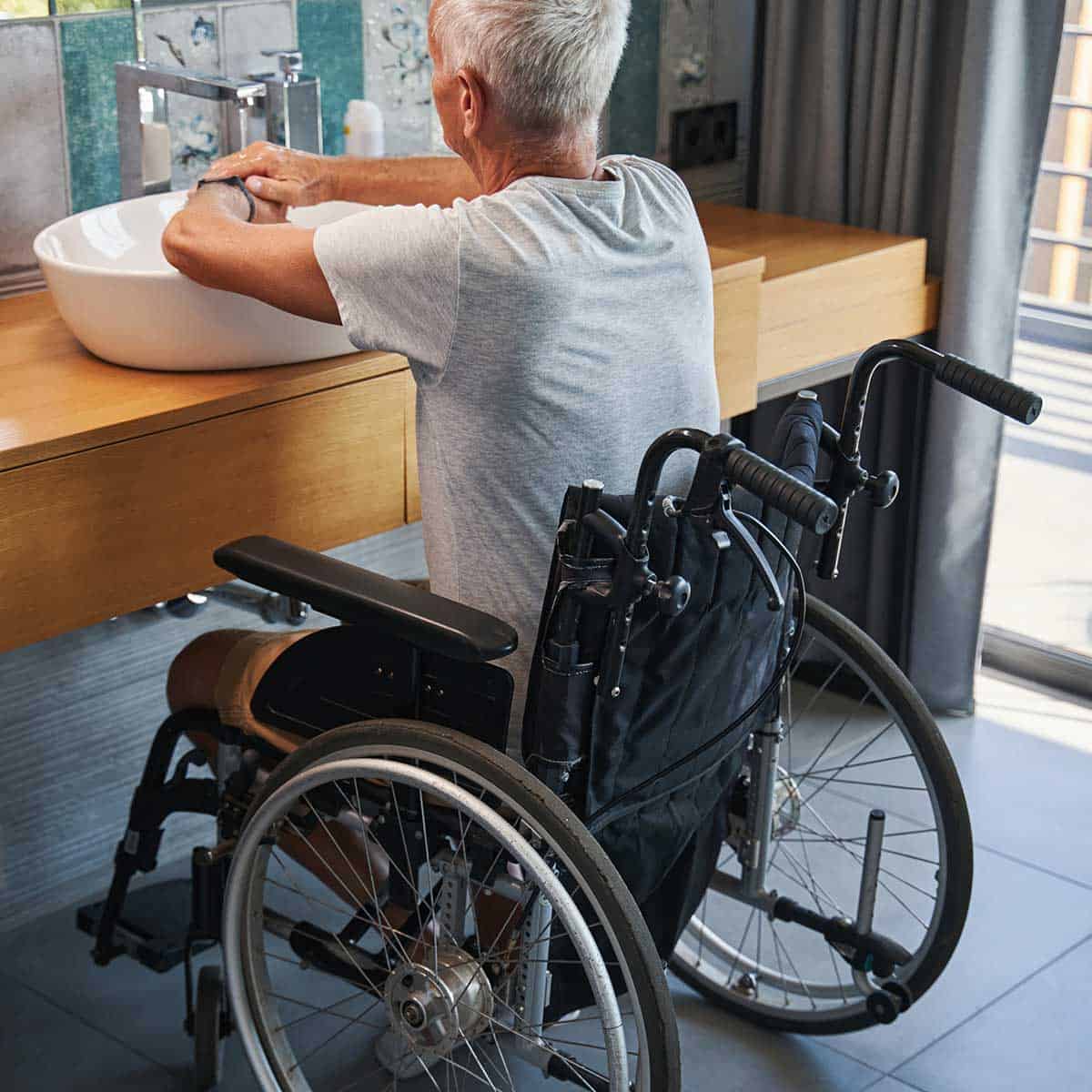
Reaching a kitchen sink from a wheelchair requires more than just lowering the countertop—the cabinet underneath needs to be removed or reconfigured to create roll-under clearance that allows a wheelchair to pull close enough to the sink to use it comfortably. Without this clearance, even a lowered sink remains at an awkward distance that makes washing hands, rinsing produce, and cleaning up difficult.
We remove or reconfigure the cabinet base beneath the sink to create roll-under knee clearance, install pipe insulation to protect legs from hot supply and drain lines, and ensure the faucet controls are positioned and styled for easy one-handed or limited-grip operation. Roll-under spaces are also created at prep areas where countertop work happens most frequently. The result is a kitchen workspace that a wheelchair user can actually occupy rather than reach toward from a distance.
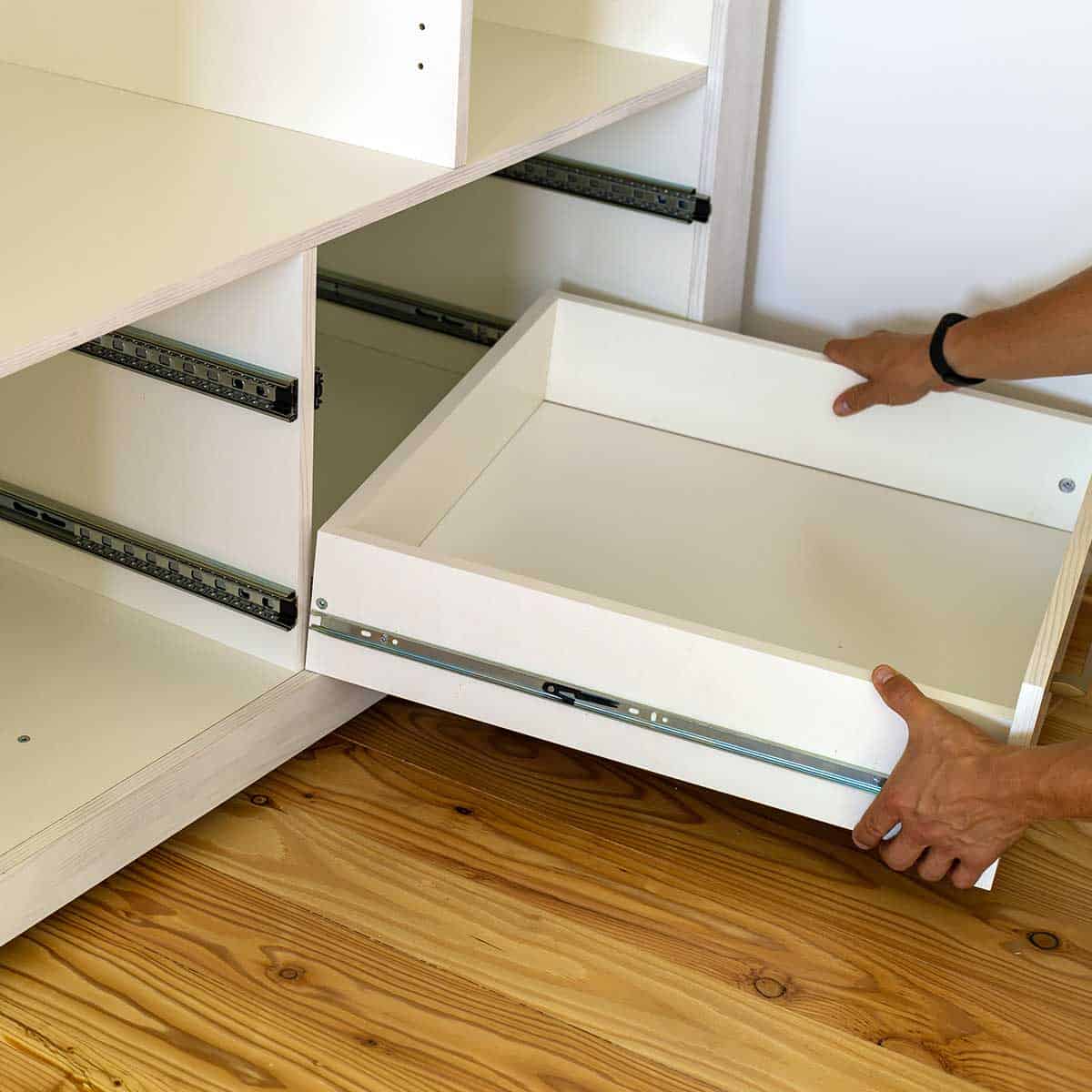
Standard kitchen cabinets—both upper and lower—are designed around standing reach. Upper cabinets are completely out of range from a wheelchair, and lower cabinets require reaching into deep, dark spaces that are difficult to access from a seated position without full bending ability.
Pull-out shelves bring the contents of lower cabinets to the front of the cabinet opening, eliminating the need to reach deep into the back of a cabinet from a seated position. Lazy Susans bring corner cabinet contents within reach without stretching across the full depth of the cabinet. We also lower frequently used upper cabinet sections where structurally feasible, and install pull-down shelf systems that bring upper cabinet contents within seated reach. Cabinet hardware is assessed and replaced where needed with lever-style pulls and D-ring handles that are easier to operate with limited hand strength or grip. These modifications are designed around how the individual actually uses their kitchen—which items they access daily and from which positions—rather than a generic checklist.
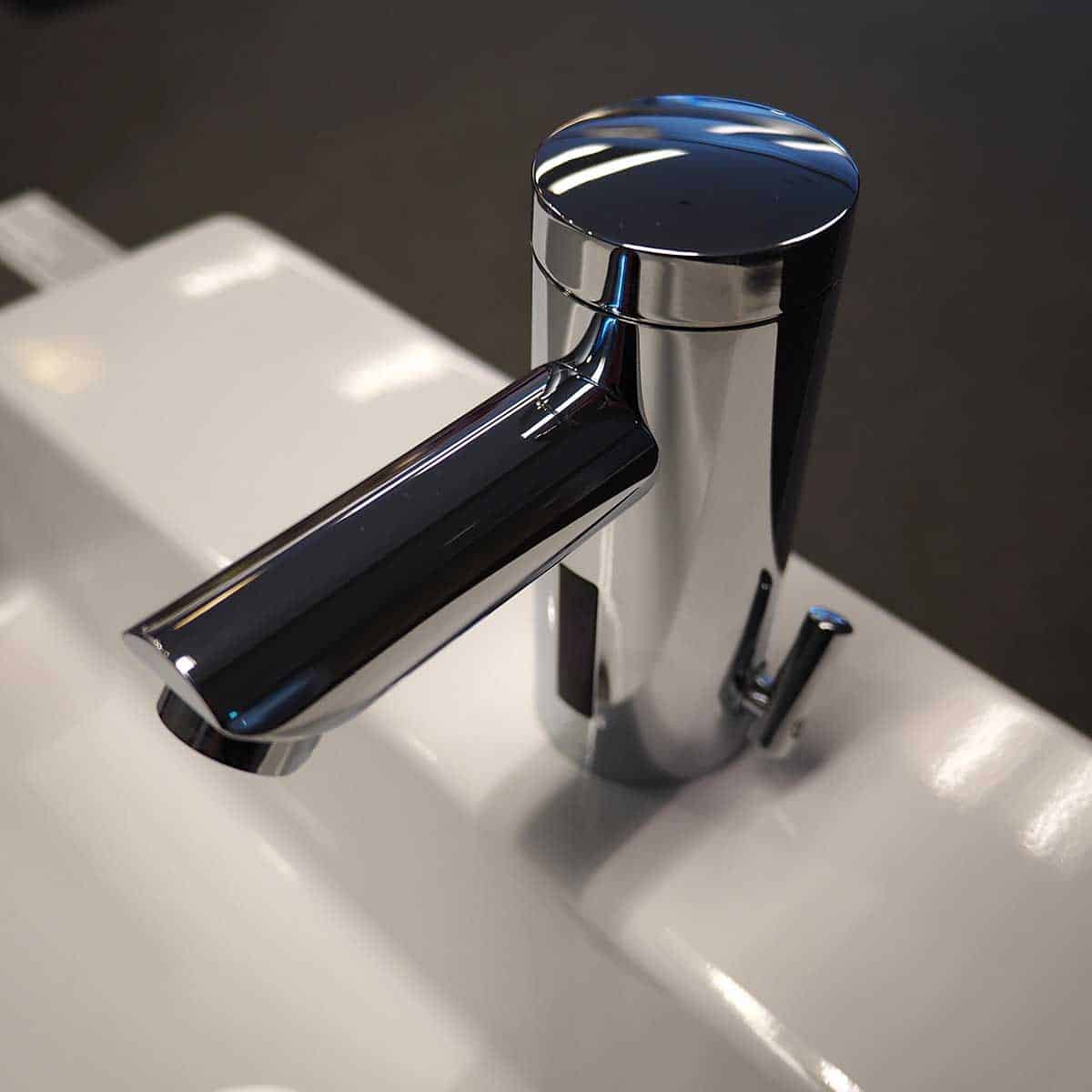
Standard kitchen faucet handles—particularly single-knob and cross-handle designs—require grip strength and wrist rotation that can be difficult or painful for individuals with arthritis, limited hand function following a stroke, or reduced strength from a neurological condition. Touchless and lever-style faucets eliminate this barrier entirely.
Touchless faucets activate with a wave or proximity sensor, requiring no grip or rotation at all. Lever-style faucets replace standard round or cross handles with single-lever controls that operate with a push or pull of the hand or wrist, without requiring a gripping motion. Both options are available in a wide range of styles and finishes that integrate naturally with existing kitchen design. Our team assesses the individual’s specific hand function and recommends the right faucet type for their situation, installs the new fixture, and confirms it is positioned and adjusted for comfortable operation from a seated height.
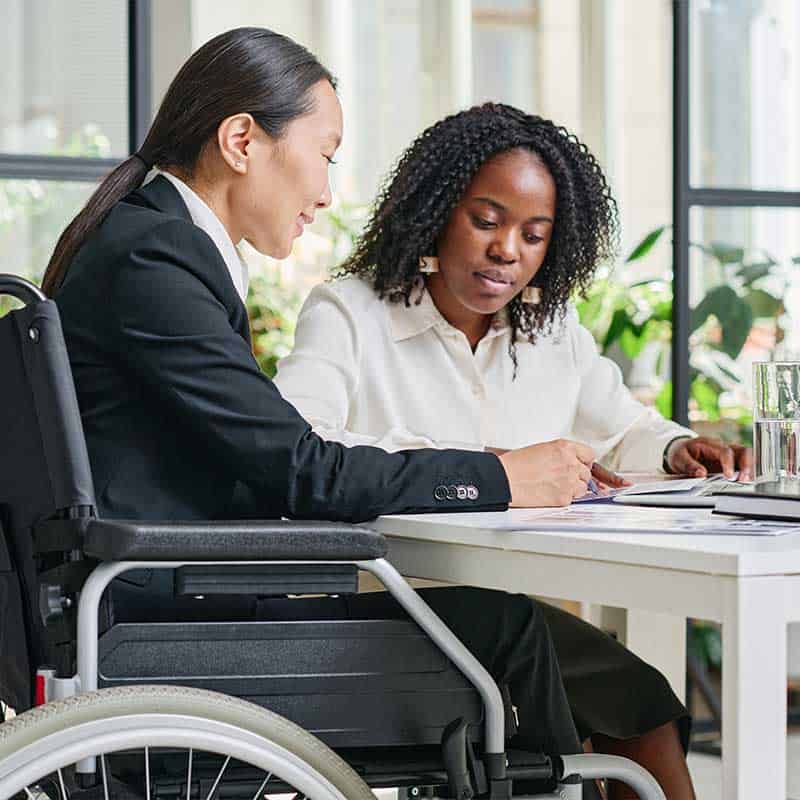
Kitchen accessibility modifications need to be designed around how a specific person actually uses their specific kitchen—not a standard package of changes applied uniformly. The individual’s reach, wheelchair dimensions, grip strength, dominant hand, daily cooking routines, and the kitchen’s structural layout all factor into what modifications will genuinely improve independence and which ones won’t.
Our C.E.A.C. certified professionals conduct Environmental Accessibility Assessments throughout Duval County, evaluating every relevant factor before any modification work is specified or started. For individuals on Florida Medicaid Waiver programs, we complete the EAA documentation required to support authorization and submit complete paperwork to minimize delays. Support coordinators at Jacksonville’s hospital systems and care networks refer to us regularly because our assessments address real daily function, our documentation is complete the first time, and our modifications are built to last. We visit homes throughout Duval County—from Ponte Vedra to the Northside, from Orange Park to the Beaches—and understand the wide range of Jacksonville kitchen layouts our team works in every week.
We provide delivery and services throughout the Jacksonville Kitchen Accessibility Modifications area including:
In my experience, Wrightway has an amazing staff that provides excellent service and care to each and every client. They are dedicated, reliable, and professional. I highly recommend them.
The wonderful people at Wrightway Medical really care about their clients. Their products and services are top notch. I highly recommend this company!
I work for the Angelus up in Hudson, Florida. We have been using Wrightway for over 15 years. I highly recommend using them for any of your medical needs you might have.

We install lowered countertops and work surfaces sized to the individual’s seated height and wheelchair dimensions, roll-under sink and prep area access with knee clearance and pipe insulation, pull-out shelves and lazy Susans for lower cabinet access, pull-down shelf systems for upper cabinet reach, lever-style and touchless faucets, and modified cabinet hardware for easier operation with limited grip strength. Each modification plan is designed around how the specific individual uses their specific kitchen—not a standard package applied uniformly.
The right height depends on the individual’s seated height, wheelchair seat height, and the tasks they need to perform. ADA guidelines suggest 28–34 inches as the accessible countertop height range. Our C.E.A.C. certified team measures each individual’s specific seated profile and designs lowered work surfaces to match—because a height that works for one wheelchair user may not work for another.
We work with Florida’s Medicaid Waiver programs—including iBudget, CDC+, and SMMC-LTC—and complete the Environmental Accessibility Assessments (EAA) required to document and support authorization for home modifications. We also work with Area Agency on Aging plans and Children’s Medical Services. Our team handles all documentation and submits complete paperwork the first time to minimize authorization delays. If you are unsure what coverage applies to your situation, we will walk you through the available options.
A C.E.A.C. certified professional visits the home to evaluate the kitchen layout, the individual’s reach, mobility equipment, hand function, and daily cooking routines. We develop a modification plan that addresses the specific barriers in that kitchen for that person, handle all permitting where required, complete the installation with quality materials, and provide full training before we leave. We serve homes throughout Duval County and understand the full range of Jacksonville kitchen layouts—from compact historic bungalow kitchens to open-plan newer construction in Southside and Nocatee.
Free Consultation
Ready to talk about what you need? Whether you're a family member researching options, a support coordinator looking for a reliable provider, or a physician who needs a responsive DME partner, we're here to help.
We'll discuss your situation, answer your questions, and figure out the best path forward—no pressure, no sales pitch. Just honest guidance from a team that's been helping Florida families since 1995.