

Age-Related Mobility Decline
Getting older doesn’t mean giving up the activities and independence you’ve spent a lifetime building. At Wrightway Medical, we understand that age-related mobility changes happen gradually—balance becomes less certain, joints stiffen, muscles weaken, and endurance decreases. These changes are natural, but they don’t have to limit your life. For over 30 years, we’ve helped seniors throughout Florida adapt to changing mobility with equipment and home modifications that keep them active, safe, and independent on their own terms.
Age-Related Mobility Decline: Aging Bodies, Ageless Spirits
Age-related mobility decline isn’t a single event—it’s a gradual process that affects each person differently. Maybe you’ve noticed stairs feel harder than they used to, or walking to the mailbox leaves you winded. Perhaps you’ve caught yourself gripping furniture for balance, or you’ve started avoiding activities because you’re not as steady as you once were. These changes deserve attention, not dismissal. Addressing mobility concerns proactively—before falls or injuries force difficult decisions—gives you control over your independence rather than having circumstances dictate your options.
We believe aging should be about adapting gracefully, not surrendering reluctantly. The right mobility equipment doesn’t announce weakness; it extends capability. A mobility scooter isn’t giving up on walking—it’s expanding your range beyond what walking allows. A stairlift isn’t admitting defeat—it’s reclaiming access to your entire home. Grab bars aren’t medical equipment—they’re practical tools that prevent the falls that steal independence. We help you reframe mobility support as empowerment, not limitation.
Your spirit doesn’t age the way your body does. The curiosity, interests, and desire for engagement that define you remain vibrant even as physical capabilities shift. We provide the tools that keep your body moving alongside your ageless spirit—so you can continue visiting grandchildren, tending gardens, exploring neighborhoods, and living the life you choose.
Contact Wrightway Medical today
Let's discuss how we can support Age-Related Mobility Decline
How We Support Age-Related Mobility
Canes for Stability & Confidence
When balance becomes less certain, a properly fitted cane provides stability without significantly changing how you move through the world. We provide standard canes, offset canes that reduce wrist strain, quad canes with four-point bases for enhanced stability, and folding canes for convenient transport. Proper cane fitting—correct height, appropriate grip, and instruction on safe use—maximizes stability benefits while maintaining natural gait patterns.
Walkers for Secure Mobility
When canes no longer provide sufficient support, walkers offer greater stability for continued safe walking. We provide standard walkers for maximum support, two-wheeled walkers that glide forward smoothly, and configurations matched to your strength, balance, and walking environment. Proper walker selection considers your specific stability needs, arm strength, and whether you’ll use it primarily indoors, outdoors, or both.
Rollators for Active Independence
Rollators—four-wheeled walkers with hand brakes and built-in seats—support active seniors who want mobility assistance without sacrificing independence. These devices roll smoothly over various surfaces, provide seats for resting during longer outings, often include storage baskets for shopping or personal items, and fold compactly for transport. We help you select rollators with appropriate wheel sizes for your typical terrain, brake systems you can operate comfortably, and seat heights matched to your body.
Gait Training & Walking Aids
For seniors working to maintain or improve walking ability, we provide equipment that supports safe practice—gait belts for assisted walking, parallel bars for home therapy, and walking aids that complement physical therapy goals. Maintaining walking ability as long as safely possible supports overall health, but proper equipment ensures practice doesn’t result in dangerous falls.
Pride Mobility Scooters
When walking endurance limits your activities, mobility scooters extend your range dramatically. Shopping trips, neighborhood walks, family outings, and community events become accessible again when you’re not limited by how far your legs can carry you. We provide Pride Mobility scooters in various configurations—compact three-wheel models for tight indoor spaces, four-wheel models for outdoor stability, travel scooters that disassemble for transport, and full-size scooters for extended range and comfort. Our team helps you select scooters matched to your typical use, living environment, and transportation needs.
Lightweight Transport Wheelchairs
For situations requiring wheelchair transport—medical appointments, airport travel, or extended outings—lightweight transport wheelchairs provide comfortable seating while companions push. These chairs fold compactly, weigh significantly less than standard wheelchairs, and provide comfortable support during activities that exceed walking endurance.
Manual Wheelchairs for Daily Use
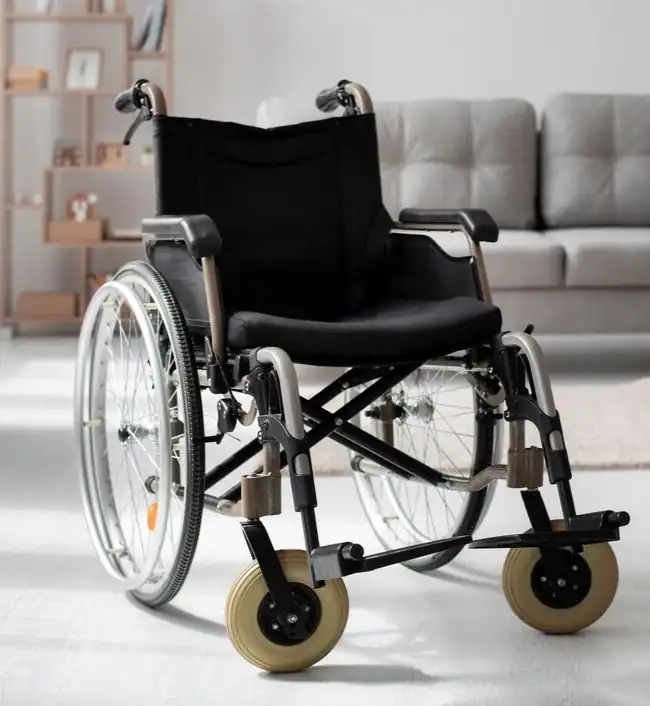
When walking becomes impractical for daily activities, manual wheelchairs provide independent mobility for those with sufficient upper body strength. We provide wheelchairs in various widths, depths, and configurations matched to your body and your home’s accessibility. Proper wheelchair fitting ensures comfortable, efficient mobility while protecting shoulder health for long-term use.
Power Wheelchairs for Maximum Independence
For seniors with limited walking ability and upper body strength insufficient for manual wheelchair propulsion, power wheelchairs provide independent mobility. We offer power chairs with intuitive joystick controls, comfortable seating systems, and configurations suited to indoor home use, outdoor community access, or both. Power mobility preserves independence when other options no longer serve your needs.
Fall Prevention Assessment
Falls represent the greatest threat to senior independence—often triggering moves to assisted living or nursing facilities. Our comprehensive fall prevention assessment identifies hazards throughout your home: loose rugs, poor lighting, unstable furniture, slippery surfaces, and missing grab bars. We provide prioritized recommendations that address highest-risk areas first, preventing the falls that change everything.
Grab Bars & Support Rails
Strategic grab bar placement provides stability where you need it most—bathrooms, hallways, stairways, and transition areas. We install commercial-grade grab bars anchored securely into structural supports, positioned at heights and angles specific to your body and movement patterns. Unlike hardware store alternatives installed with toggle bolts, our professionally installed grab bars support your full weight during actual falls—when they matter most.
Bathroom Safety Modifications
Bathrooms combine every fall risk factor: wet surfaces, hard floors, confined spaces, and activities requiring balance and coordination. We install walk-in tub conversions that eliminate dangerous step-overs, grab bars positioned for your specific needs, raised toilet seats that reduce strain on knees and hips, shower seats for stable bathing, hand-held showerheads for seated use, and non-slip surfaces throughout. Comprehensive bathroom safety modifications address the room where most senior falls occur.
Stairlifts for Continued Home Access
Stairs become increasingly challenging as strength and balance decline, but they shouldn’t force you from a beloved home or confine you to a single floor. Our Harmar stairlifts provide safe, comfortable transportation between levels—straight or curved configurations matched to your staircase, comfortable seats with safety belts, intuitive controls, and battery backup operation during power outages. Stairlifts preserve access to your entire home regardless of stair-climbing ability.
Wheelchair Ramps for Entry Access
Front steps create barriers that grow more challenging with declining mobility. Our EZ-ACCESS ramps provide gentle, code-compliant access for walkers, wheelchairs, scooters, or simply unsteady feet. We design ramp configurations that complement your home’s appearance while providing safe entry and exit regardless of mobility equipment or ability level.
Lift Chairs for Safe Transitions
Rising from seated positions becomes increasingly difficult as leg strength and balance decline—and falling during the attempt causes serious injuries. Power lift chairs gently elevate and tilt forward, assisting you to a standing position safely. These chairs provide comfortable seating with positioning options throughout the day, then support safe standing when you’re ready to move. Various sizes, styles, and lift mechanisms accommodate different body types and room décors.
Adjustable Beds for Comfort & Safety
Quality sleep becomes more challenging with age, and getting in and out of bed safely requires attention as balance and strength decline. Our Flex-A-Bed adjustable beds address both concerns—elevating the head to reduce acid reflux and improve breathing, raising legs to reduce swelling and improve circulation, and adjusting bed height for safer entry and exit. These beds support better sleep and safer transfers throughout the night.
Proper Seating Assessment
The chairs and sofas you’ve used for years may no longer serve aging bodies well—seats too low for safe standing, cushions too soft for stable sitting, armrests inadequate for pushing up. We assess your seating throughout your home and recommend modifications or replacements that support safe sitting and standing throughout daily activities.
Vehicle Lifts for Scooter Transport
Mobility scooters provide independence locally, but taking them to distant destinations, family visits, or vacation spots requires vehicle transport. We install Harmar vehicle lifts—exterior hitch-mounted systems and interior options—that load scooters or power wheelchairs into personal vehicles safely and easily. Vehicle lifts extend your independence beyond your immediate neighborhood to anywhere you want to go.
Scooter Storage & Charging Solutions
We help you establish practical scooter routines at home—identifying storage locations, setting up accessible charging stations, and ensuring your scooter is always ready when you want to go. Proper home setup supports consistent scooter use that maximizes your independence benefits.
Reaching & Gripping Aids
Reduced flexibility and grip strength make everyday tasks challenging—retrieving items from high shelves, picking up dropped objects, opening jars, managing buttons. We provide reaching tools, grip aids, dressing assists, and adaptive equipment that keeps daily tasks manageable without assistance. These practical tools maintain independence in activities that might otherwise require help.
Lighting & Visibility Improvements
Aging eyes require more light while becoming more sensitive to glare. Poor lighting contributes significantly to falls and limits safe mobility throughout your home. We assess lighting throughout your living space and recommend improvements—brighter bulbs, task lighting, motion-activated night lights, and glare reduction—that support safe navigation.
Medical Alert Systems
Peace of mind matters for seniors living independently and families who worry about them. We help you access medical alert systems that summon help when needed—wearable buttons, fall detection devices, and monitoring solutions appropriate for your situation and concerns.
Why Choose Wrightway Medical for Age-Related Mobility Support
Progressive Approach to Aging
We help you address mobility changes proactively rather than reactively—implementing solutions before falls or injuries force crisis decisions. This forward-thinking approach preserves independence longer and provides control over your aging journey.
Gradual Support Matching
Age-related mobility decline happens gradually, and equipment needs evolve over time. We establish relationships that support progression through mobility aids as appropriate—canes to walkers to rollators to scooters—ensuring you always have equipment matched to current abilities without over-supporting or under-supporting your needs.
Fall Prevention Expertise
Falls change everything for seniors. Our assessments specifically identify fall risks, and our recommendations prioritize preventing the injuries that steal independence. We understand that fall prevention is independence preservation.
Dignity-Centered Solutions
We present mobility equipment as empowerment tools, not medical devices that announce decline. Our recommendations support your continued engagement with life rather than withdrawal from activities you love.
Comprehensive Home Assessment
Aging safely at home requires evaluating the whole environment—not just obvious hazards but subtle risks that accumulate. Our thorough assessments identify concerns you might not notice and prioritize solutions that provide maximum safety benefit.
Medicare & Insurance Navigation
Many mobility devices and some home modifications are covered by Medicare and supplemental insurance. We handle the complex eligibility requirements, documentation needs, and billing processes—ensuring you receive covered equipment without navigating insurance bureaucracy during an already challenging time.
Related Products
FAQs Age-Related Mobility Decline
At what point do I need mobility equipment—I'm just slowing down with age?
If you’re avoiding activities because walking is difficult, feeling unsteady on your feet, experiencing fatigue that limits outings, or worrying about falling, it’s time for mobility support. Walkers, rollators, or mobility scooters aren’t admissions of defeat—they’re tools that extend your independence and keep you active in your community longer than struggling without support.
Will using a walker or scooter make me weaker or more dependent?
No—proper mobility equipment actually keeps you more active, which maintains strength better than limiting activities due to fear or fatigue. A rollator lets you walk farther safely, building endurance. A mobility scooter allows community participation you’d otherwise miss. Equipment that keeps you moving and engaged supports overall health better than staying home to avoid mobility challenges.
Can I maintain independence at home as my mobility declines?
Absolutely. Strategic home modifications and equipment allow most people to age in place safely despite mobility changes. Stairlifts maintain access to all floors, bathroom modifications support safe personal care, grab bars prevent falls, and adjustable beds ease transfers. We create comprehensive plans that adapt your home to support you through progressive mobility decline.
How do I know if I need a walker, rollator, or mobility scooter?
Walkers provide maximum stability for individuals with significant balance concerns who walk short distances. Rollators with seats work well for those with limited endurance who need rest breaks. Mobility scooters serve people who can’t walk extended distances but want to maintain community participation. During consultation, we assess your balance, endurance, and lifestyle to recommend appropriate equipment.
Does Medicare cover mobility equipment for age-related decline?
Yes—when mobility limitations are documented as medically necessary by your physician, Medicare covers walkers, rollators, wheelchairs, and sometimes mobility scooters. The key is proper documentation showing how mobility decline affects your daily function and health. We work with your healthcare providers to obtain necessary prescriptions and handle all authorization and billing.