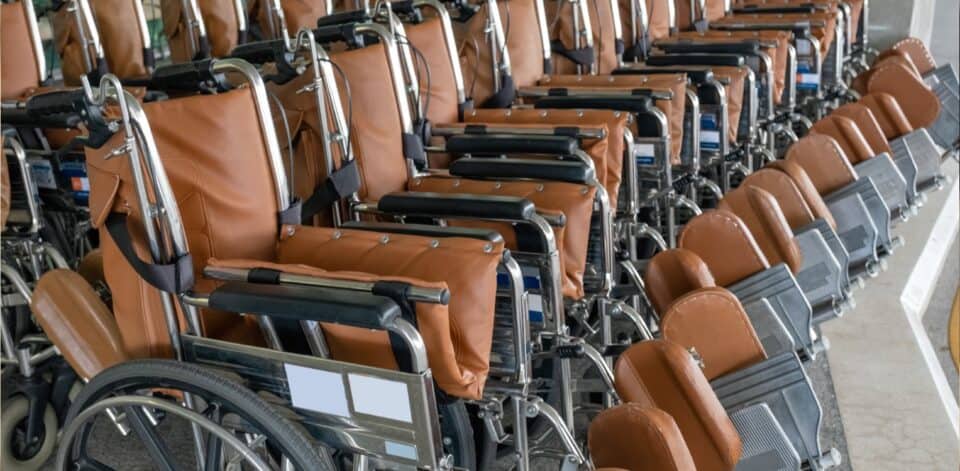

If you’re expecting a soft “it depends” answer, you’ll be disappointed. In most real-world homes, one option is clearly better once you’re brutally honest about mobility, space, budget, and future needs. Families waste thousands on the wrong equipment because no one asks the tough questions up front: Will you still be walking those stairs in three years? Will you ever need to use this with a wheelchair?
The uncomfortable truth: if there’s already a wheelchair in the house — or a strong likelihood of one soon — a platform lift almost always beats a stairlift as the smarter long-term investment. But if you’re dealing with a single user who can still transfer independently, and you’re fighting a tight budget or a tricky staircase, a stairlift can be a fast, excellent solution.
This isn’t theoretical. Some Florida families choose a cheap stairlift as a temporary fix, only to rip it out two years later and pay for a platform lift anyway. Others use a carefully chosen stairlift to keep a parent in their beloved two-story home for nearly a decade. The difference isn’t luck; it’s planning, honesty, and understanding the trade-offs. So let’s get specific — not generic accessibility talk, but the concrete realities that decide which lift actually fits your home and your family.
Stairlift or Platform Lift?
Learn which option — stairlift or platform lift — matches your home’s layout, budget, and mobility needs.
- Fit: stairlifts suit narrow or curved stairs and users who can transfer to a seat; platform lifts suit wheelchair users and homes with space for a vertical platform.
- Installation and cost: stairlifts are generally cheaper, quicker to install, and need less structural change; platform lifts cost more, require more space, and may need permits or reinforced flooring.
- Safety and daily use: stairlifts offer compact seating and simple controls for occasional transfers; platform lifts provide level, safer wheelchair access and greater independence for full-time wheelchair users.
What Is a Stairlift?
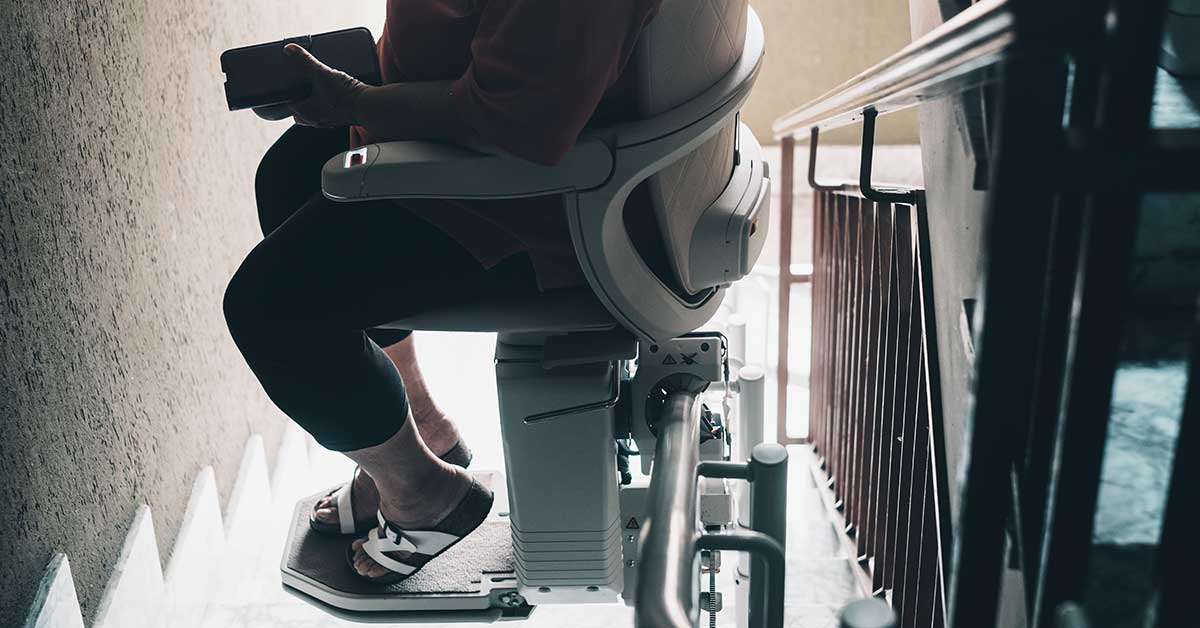
A stairlift is a motorized chair that rides along a rail mounted to your staircase, carrying a seated person up and down the stairs. You sit down, secure the safety belt, press and hold a button, and the chair glides along the rail at a slow, controlled speed. The whole assembly fits onto the steps themselves, so your walls and structure usually stay untouched.
From Tampa to Jacksonville, stairlifts are the first device people think of when stairs become intimidating. They install on straight or curved staircases, indoor or outdoor, and they plug into a standard outlet with battery backup for power outages. For many older adults still walking short distances with a cane or walker, a stairlift feels like a natural extension of their current independence rather than a full shift to wheelchair-based living.
The big catch: stairlifts assume you can transfer safely to and from the chair. If getting out of a recliner is already a wrestling match, relying on a stairlift without support is wishful thinking. Plenty of users can ride up fine but nearly fall trying to stand at the top landing — which is where pairing a stairlift with grab bars, a stable chair, or a ceiling lift for home use becomes not just smart but essential.
Insider Tip: No matter how advanced the stairlift is, if the top and bottom landings aren’t safe and clear, the lift becomes a fall-risk delivery system. Evaluate the transfer points first, then the equipment.
What Is a Platform Lift?
A platform lift (often called a vertical platform lift, or VPL) is essentially a small, contained elevator for wheelchairs, power chairs, scooters, or standing users. Instead of sitting in a chair, the user rolls or walks onto a flat platform, closes a gate or barrier, and uses controls to move straight up or down between levels. The lift travels vertically — usually one story or less — on a mast beside the platform.
Where stairlifts ride along existing stairs, platform lifts bypass them entirely. That’s why they’re so powerful for homes where stairs aren’t just hard but impossible. A full-time manual or electric wheelchair user can stay in the same mobility device from bedroom to living room to outdoors, without risky transfers. And for homes where a ramp would need 30–40 feet of length to clear the height, a platform lift is a space-saving alternative, especially when paired with professional wheelchair ramp installation.
Platform lifts demand more planning: floor space, structural consideration, and often permitting — especially for outdoor models in Florida’s weather. But they’re also the only honest answer in many situations where a person’s strength or balance is likely to decline. A well-placed platform lift can keep the front stairs intact for visitors while giving the wheelchair user a smooth, private access path from driveway to main floor.
Insider Tip: If someone already needs help on the stairs, assume they’ll eventually need help off the stairs too. A platform lift keeps you from redoing the plan every two years as mobility changes.
Stairlifts vs. Platform Lifts: Key Differences
The decision rarely comes down to one feature. It’s usually a tug-of-war between installation logistics, aesthetics, safety, and cost over time.
Installation
For most Florida homeowners, installation is the first big surprise — either pleasantly easy or unexpectedly complicated, depending on the device.
Stairlifts mount directly to the treads of your existing staircase. For standard straight stairs, professional installers in areas like Tampa and Jacksonville can often finish in a single day, sometimes a few hours. Because they don’t usually require structural changes, permits are often minimal or unneeded indoors, though local codes vary. Curved stairlifts are custom-built for your specific staircase, which means a longer lead time (often 4–8 weeks) and a more complex install, but still little disruption to walls and floors.
Platform lifts are another story. Even “porch lifts” that look simple need a stable, level pad (often concrete), proper anchoring, and safe approaches at top and bottom. Indoor VPLs may require cutting through floors, reinforcing structures, and coordinating electricians and city inspectors. As industry case studies from accessibility contractors note, a straightforward straight stairlift might go in within half a day, while a platform lift can take multiple days plus permit wait times. That doesn’t make platform lifts bad — it just means you should think of them more like adding a small elevator than plugging in an appliance. Where the layout lets the lift sit beside a porch or deck, disruption can be manageable, but you still need installers who understand Florida’s building codes, humidity, and hurricane exposure.
Insider Tip: If someone tells you a platform lift is “just like a big stairlift,” walk away. One is a stair accessory; the other is a structural system. Treating them the same leads to corners you’ll regret cutting.
Design
Design isn’t just about finishes — it’s how these devices interact with daily life and everyone who shares the home.
Stairlifts stay close to the stairs. Modern models fold up — seat, armrests, and footrest all lift to reduce intrusion. In most two-story Florida homes, a folded stairlift still leaves enough width for others to use the stairs comfortably, though very narrow stairs can get cramped. Curved models can park the chair around a corner or down a hallway at the top, a lifesaver in tight landings where unloading right at the edge feels risky.
Platform lifts occupy a dedicated footprint. A typical residential platform runs about 36″ x 48″ or larger, plus the mast and gate area — a chunk of prime real estate indoors, and outdoors it competes with landscaping, walkways, or porch seating. What they give back is full mobility: a power wheelchair, oxygen, and caregiver can ride together, and for some couples that shared movement up and down is surprisingly meaningful.
Design also determines how visible your solution is. A stairlift on a grand front staircase can broadcast “someone here is struggling,” which some families hate. Platform lifts can sometimes be tucked to the side, integrated with railings, or enclosed — for example, a VPL placed behind a privacy screen beside the garage preserves the classic front steps for guests while giving the wheelchair user a dignified, weather-protected route.
Safety
Both lifts are dramatically safer than making do with unassisted stairs, but they protect — and fail — in different ways.
Stairlifts typically include seatbelts, swivel seats at the top landing for safer exits, footrest and obstruction sensors that stop on contact, constant-pressure controls (you must hold the button to move), and battery backup for outages. Their main risk is transfers and landings: a misjudged step, a cluttered landing, or a poorly placed rug can undo everything the lift does right. For users who get dizzy or have significant cognitive changes, even remembering to sit properly and buckle in becomes a concern. Some families pair stairlifts with ceiling lift installations in Tampa so that, once upstairs, the user can be moved safely to bed or recliner without a manual lift.
Platform lifts emphasize full-platform safety edges that stop if something is caught underneath, gates or doors that must be closed before moving, controls positioned for wheelchair users, guardrails and higher sidewalls to prevent rolling off, and very slow, controlled speed. Their main risks are misuse: overloading, leaving objects on the platform as tripping hazards, or letting children treat it like a ride. In Florida’s climate, poorly maintained outdoor lifts can become slippery or malfunction, which is why many installers recommend scheduled maintenance at least annually, more often near the coast.
Insider Tip: Don’t compare catalog safety lists — compare real-life behavior. If the user forgets basic steps or acts impulsively, choose the lift that gives them the least opportunity to do something unsafe.
Cost
This is where many families make understandable but short-sighted decisions. As of the mid-2020s, typical cost ranges (equipment plus basic installation) in much of Florida look roughly like this:
- Straight stairlift: often $2,500–$5,000, depending on features, seat upgrades, and brand.
- Curved stairlift: typically $8,000–$15,000+, because each rail is custom-made to your staircase.
- Residential platform lift: commonly $10,000–$20,000+ once you include the unit, site prep, concrete pad or structural changes, electrical, and permits. Complex indoor installs can go higher.
On paper the stairlift almost always wins the cost argument, especially straight models. But the real question is: how many times are you going to buy? A family that installs a straight stairlift and then moves to a wheelchair three years later ends up paying for a platform lift anyway — and is lucky to recoup a few hundred dollars reselling the stairlift. By many mobility case comparisons, most full-time wheelchair users who stay in their homes longer than five years end up needing a platform lift, an elevator, or a move to a single-story home, which turns a stairlift into an expensive stepping stone. On the other hand, for an older adult whose main challenge is arthritis pain but whose walking stability is still reasonable, a stairlift may be the last major modification they ever need.
Pros and Cons of Stairlifts
Pros
The biggest advantage of stairlifts is that they meet people where they are — still walking, still mostly independent, but nervous about falls on the stairs. They’re fast to install, relatively affordable next to platform lifts, and they don’t demand major construction, which is a relief for homeowners tired of contractors tearing up the house.
They also preserve the current layout. You’re not carving out new shafts or losing interior space to a platform; you’re using the stairs you already have. And modern stairlifts are less industrial than they used to be, with neutral colors, slim rails, and fold-up seats that try hard not to look institutional. For some seniors, that psychological comfort — sitting in a proper chair with armrests for a smooth ride — matters as much as the physical support. Finally, stairlifts pair well with other targeted solutions: an indoor stairlift, a mobility scooter outside, a small threshold ramp at the door, and grab bars in the bathroom together build a network of support rather than one giant system.
Insider Tip: If your stairs are straight, your budget is tight, and you’re not in a wheelchair, a stairlift is almost always the best value for your next five years — as long as everyone understands it may not be the ten-year plan.
Cons
Stairlifts fall apart when mobility drops below a certain point. If someone can’t stand, pivot, and sit with basic stability, the transfers become the weakest link — feet catching, knees buckling, or users trying to stand before the chair fully swivels at the top.
They also don’t travel with your equipment. If you rely on a rollator, walker, or oxygen cart, you need duplicates upstairs and down, or someone to carry them. That juggling seems minor at first but wears on caregivers and users over months and years. Space is another issue: even folded, a stairlift narrows the usable stairs, which makes carrying laundry or moving furniture awkward in tight townhomes and older properties, and younger family members in multi-generational homes may resent the reduced width. There’s a subtler cost too — for some users a stairlift becomes a half-measure that delays facing bigger needs. They stay upstairs more, avoid going out, or resist a wheelchair because the stairlift is “supposed to fix things,” and months later they’ve lost more strength and confidence than they would have with a more holistic plan, such as combining a platform lift with indoor and outdoor mobility scooters.
Pros and Cons of Platform Lifts
Platform lifts are the heavy hitters of home accessibility. A well-sited one doesn’t just help someone use the stairs — it makes the stairs irrelevant. For full-time wheelchair users, that’s a game changer: you roll on in your chair or scooter, hit the controls, and arrive at the next level still in the device you trust. No transfers, no guessing whether your legs will cooperate today.
That continuity is huge for safety and dignity. Users who switch from a stairlift to a platform lift after moving into a power wheelchair often describe it as finally stopping the all-day juggle of their body between devices. Caregivers feel it too — they can escort and steady someone on the platform instead of coordinating moves to and from a chair on a narrow landing. Platform lifts also excel at complex entrances: split-level homes, high porches, or lots where a code-compliant ramp would look like a wooden roller coaster can often be handled with a single compact VPL. By many providers’ estimates, a platform lift can replace 20–40 feet of ramp in some configurations, which matters on tight city lots and heavily landscaped yards.
The downside is real: cost and construction. Few families are excited about spending low five figures, approving structural modifications, and waiting for permits, especially when medical bills are already stretching the budget. Indoor lifts can eat into the usable footprint of living rooms, halls, or entryways — precious space in smaller Florida homes and condos. Platform lifts are also more visible as a sign of serious disability; some people don’t care, others care a lot, and families often wrestle with pride, grief, and identity over adding “an elevator thing” to the house. The best outcomes tend to come when families stop treating the disability as temporary and instead build the home around how life actually works now — and will likely work five years from now.
Insider Tip: If you’re already rearranging furniture and worrying about doorway widths, brace yourself: a platform lift is probably in your future. Design for that reality now instead of fighting it every 12 months with incremental fixes.
Are You Considering a Stairlift or Platform Lift?
Here’s a blunt framework for actual Florida homes — Tampa bungalows, Jacksonville townhomes, suburban two-stories.
You’re probably better off with a stairlift if:
- You can still walk short distances with a cane or walker and transfer with basic stability.
- You’re not a full-time wheelchair user, and your doctor doesn’t expect rapid decline.
- Your stairs are straight or mildly complex, and you want a fast, lower-cost solution.
- Your budget can’t stretch to a platform lift right now, but you need something soon.
- You’re willing to pair it with smart add-ons: grab bars, maybe a ceiling lift installation in Jacksonville, safer lighting, and clutter-free landings.
You’re probably better off with a platform lift if:
- You already use a manual or electric wheelchair most of the day.
- Transfers (bed to chair, chair to toilet) are tiring, scary, or require heavy caregiver help.
- Your home has steep or high stairs to main entries that make ramps impractical.
- You want a solution that will still work if your mobility declines further.
- You’re making broader accessibility changes anyway — widening doors, considering ceiling lifts, reworking bathrooms — so folding a lift into that plan is logical.
The biggest mistake isn’t choosing wrong; it’s choosing in a vacuum. The same family debating these lifts is often also weighing whether to upgrade a wheelchair, add a scooter, or modify a vehicle. Reading this alongside guides on manual vs. electric wheelchairs and mobility scooters gives a more complete picture of what everyday mobility should look like.
The short version: stairlifts are brilliant bandwidth savers for people who are still mostly walking but can’t trust the stairs anymore, while platform lifts are life-structure changers for people whose mobility revolves around a wheelchair or scooter and will for the foreseeable future. One isn’t better than the other — they’re tools for different stages of the same story. The real victory is keeping your home livable, your routines realistic, and your dignity intact as needs change.
If you’re in Florida and staring at your stairs wondering what’s next, talking to a team that installs both stairlifts and platform lifts — in cities like Tampa and Jacksonville — is far more valuable than talking to someone who only sells one, because they’re less likely to force your life to fit their product line. The right question isn’t only “which fits your home?” It’s “which one fits the future you’re actually headed toward?” Answer that honestly and the choice gets much clearer — and your home becomes a place you can truly stay, not just one you’re trying to hang onto.
Common Questions
Who benefits most from stairlifts versus platform lifts? Both help homeowners with limited mobility, but stairlifts best suit users who can transfer independently, while platform lifts serve wheelchair users and heavy-equipment needs.
What are the cost differences between stairlifts and platform lifts? Stairlifts generally cost less to buy and install; platform lifts have higher upfront and installation costs because of their size and structural requirements.
How difficult is installation for stairlifts versus platform lifts? Stairlift installation is usually quick and minimally disruptive, while platform lifts often require structural work, permits, and longer installation times.
Who can maintain and service each lift at home? Certified technicians from the manufacturer or a mobility provider should handle maintenance; homeowners can manage basic cleaning and visual inspections between services.
Aren’t platform lifts bulky and unsuitable for most homes? They do take more space than stairlifts, but compact models and professional planning make them workable in many homes.
Which option offers better long-term value overall? It depends on individual needs: stairlifts often deliver lower lifecycle costs, while platform lifts add wheelchair accessibility and wider usability.