


When people ask power wheelchair vs. manual wheelchair: which is right for your needs?, I always push back on the question itself. The worst mistake you can make is treating this like a generic pros-and-cons shopping list. This isn’t about gadgets; its about how you’re going to live your actual life how you get out the front door, handle a curb cut in August heat, or make it through a long doctors visit without feeling wrecked. If you pick purely on price or what your neighbor uses, you’re almost guaranteed to regret it.
Ive watched that regret play out in real time. A former client of mine, a 52yearold man with progressing multiple sclerosis, insisted on a manual chair because I don’t want to look more disabled. Within six months, he had shoulder pain so severe he could barely transfer, and his world shrank to his living room. Another client in her 30s fought for a power wheelchair early after a spinal cord injury; she took some judgment from family. You’re giving up on walking but she kept her shoulders, her energy, and her job. Same diagnosis category, radically different lives, largely because of the chair they chose.
Lets be blunt: in the manual vs. electric wheelchair debate, independence doesn’t always mean self propelling and strength doesn’t always mean walking more. Independence means you can do what you want, when you want, as safely and reliably as possible. Strength means preserving your body for the long haul. With that in mind, lets dismantle the myths and look at what actually matters.
Choosing the Right Wheelchair
Learn how manual and power wheelchairs differ, who benefits from each, and what to check for cost and insurance coverage. – Manual wheelchair: best if you have upper body strength and want lower cost, portability, and simple maintenance, but it causes more fatigue and limits range. – Power (electric) wheelchair: best if you have limited strength/stamina or need longer-range independence offers easier propulsion and more features but costs more, needs charging/maintenance, and often requires medical justification for coverage. – Power wheelchair vs. manual wheelchair: which is right for your needs? Choose manual for self propulsion, travel ease, and savings; choose power for mobility impairments, caregiver limits, or daily long distances and verify Medicare/insurance eligibility and try models for proper fit.
Manual vs. Electric Wheelchair
Manual vs. electric wheelchair shouldn’t be framed as old school vs. high tech or serious disability vs. milder disability. That’s lazy thinking. The real dividing lines are: your upper body strength, endurance, environment, and how your condition is likely to change over the next 510 years. If you don’t ask those questions, you’re essentially buying the wrong size shoes and hoping the blisters wont be that bad.
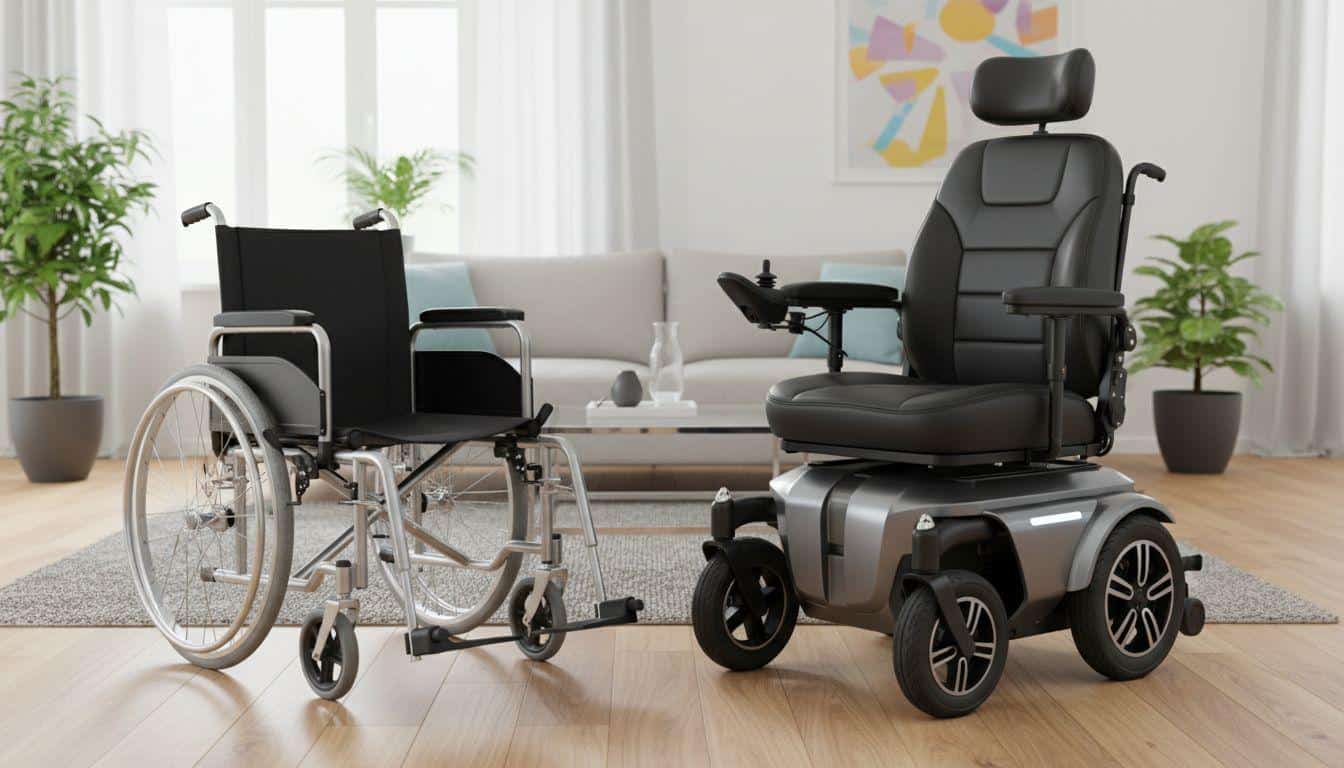
Manual wheelchairs are propelled by your arms or by a caregiver pushing. They’re mechanically simple: frame, wheels, footrests, brakes. Electric or power wheelchairs use batteries and motors, driven by a joystick, head array, sip and puff, or alternative controls. There’s a myth that manual means active, power means passive. Ive seen incredibly active people in power chairs who travel, work full time, and live independently and Ive seen people in manual chairs trapped at home because the physical effort to go out is too punishing.
One of the most eyeopening days I had as a rehab consultant was sitting with an older couple in a hot Jacksonville parking lot. The husband was in a manual chair; his wife was pushing. The incline to the car was modest maybe 5 degrees. Halfway up, she stopped, flushed, breathing hard. He looked embarrassed, then angry. That 30foot stretch might as well have been a mountain. A modest power chair would have turned that nonevent into nothing. Just another smooth exit from the doctors office.
Insider Tip (from a rehab therapist)
Don’t start with manual or power? Start with: How far do you actually need to move every day, on what surfaces, and how do you feel at the end of a typical day now? The right answer usually reveals itself if you’re honest about those three things.
Key Differences
The key differences between manual and electric wheelchairs are not just about whether there’s a battery. They shape your daily energy use, your long term joint health, how much help you need, and how easily you can navigate your home and community.
1. Physical Effort and Fatigue
A manual chair demands constant physical work. Pushing on carpet vs. tile is like the difference between strolling and slogging through sand. According to research published in Spinal Cord, manual wheelchair propulsion can require oxygen consumption comparable to moderate to vigorous exercise, especially on inclines or soft surfaces. That sounds virtuous exercise is good, right? Not if that exercise is burning all the energy you need for work, parenting, or just enjoying your evening.
Power wheelchairs flip that equation. They drastically reduce physical exertion. For people with cardiac issues, lung disease, neuro-muscular conditions, or even severe arthritis, that energy savings can be the difference between a full life and an exhausted one. Ive lost count of how many clients told me, two months after switching to a power chair, I didn’t realize how tired I was all the time until I stopped pushing.
2. Speed, Distance, and Terrain
Manual chairs are fine for short, flat distances inside most homes, in well designed accessible buildings, smooth sidewalks. Add distance, hills, thick carpet, grass, or broken pavement, and the power chair wins every time. In north Florida, Ive watched manual chair users struggle with threshold ramps and exterior transitions that power chair users barely notice.
Electric wheelchairs typically travel 35 mph, with ranges between 820 miles per charge depending on model and conditions. That range matters if your typical day includes going from home to bus stop to work to errands.
3. Portability and Storage
Manual wheelchairs especially lightweight or ultralight model scan be folded and lifted into a car trunk. Many are in the 1530 lb range, which is manageable for a lot of caregivers. Power wheelchairs and power assist chairs are much heavier, often between 150300 lbs, and usually require a vehicle lift, ramp, or van. However, pairing a wheelchair with the right home accessibility solutions (like ramps and widened doors) can make either type realistic in a home setting.
4. Maintenance and Reliability
Manual chairs are mechanically simple. A flat tire or loose caster is annoying but usually fixable with basic tools. Power chairs introduce batteries, electronics, motors, and charging routines. You trade daily physical labor for daily charging responsibility and occasional technical issues. In my experience, people who are willing to treat their power chair like a car regular service, watching battery health do very well. People who don’t plug it in consistently? Not so much.
5. Control Options and Customization
Power wheelchairs open up sophisticated control systems for users with very limited mobility: chin controls, head arrays, sip and puff, specialty joysticks. Manual chairs require at least some usable arm/hand function (unless always pushed by someone else). Both categories offer extensive seating and positioning options, but power chairs often provide powered tilt, recline, and leg elevation, which can be game changing for pressure management and pain control.
Pros and Cons of Manual Wheelchairs
Pros
Manual wheelchairs excel in simplicity, portability, and when chosen correctly protecting your independence in tight indoor spaces. Ive seen athletes in ultralight chairs do things that would make a CrossFit trainer jealous: hopping curbs, negotiating crowded bars, navigating tiny bathrooms that would trap a power chair at the doorway.
Specific advantages include:
- Lightweight and fold able: Especially true of ultralight and active user chairs, which can weigh under 20 lbs without wheels. That means easier car travel and less dependence on special vehicles.
- Lower upfront cost: Entry level manual chairs are far cheaper than power models, and even high end custom manuals are usually below the cost of complex power chairs.
- Low maintenance: Fewer moving parts, no batteries, no charging routines.
- More intuitive in tight spaces: Skilled users can pivot, back, and spin quickly in narrow hallways and small bathrooms.
- Perceived normalcy: This one is uncomfortable to talk about, but real. Many people report less stigma in a manual chair compared to a power chair though, in my view, making medical decisions based on other peoples comfort is a trap.
From a purely functional standpoint, manual wheelchairs work best for people who:
- Have good upper body strength and hand function.
- Live in relatively accessible environments (smooth surfaces, ramps, few hills).
- Need frequent car transfers and value a chair that breaks down easily.
Insider Tip (from a wheelchair technician)
If you’re going manual, don’t cheap out on frame weight and wheel quality. A 10pound difference in chair weight can feel like night and day by 4 p.m. Spend the money there; its the difference between gliding and grinding.
Cons
The downsides of manual wheelchairs are under discussed, and they can be brutal over time. Shoulder injuries are the big one. According to multiple studies summarized by the Paralyzed Veterans of America guidelines, over 70% of long term manual wheelchair users report shoulder pain. Think about that: the very joints you rely on for transfers, dressing, and toileting are being hammered every day.
Common issues include:
- Overuse injuries: Rotator cuff tears, impingement, carpal tunnel syndrome, elbow tendonitis. Ive watched strong, independent users slowly lose function over years because no one warned them about cumulative strain.
- Limited distance: The farther you go, the more you pay in fatigue. Ive had clients tell me they technically can push a half mile but then need a 2hour nap, which defeats the point.
- Terrain limitations: Grass, gravel, thick carpet, steep rampsthese turn into real barriers.
- Dependence in certain contexts: You may be independent at home but need a pusher at the mall, at the zoo, or in hot weather.
- Energy tradeoffs: If pushing your chair is your cardio for the day, you might have nothing left for work, kids, or social life.
I learned this the hard way with a younger client who used a manual chair for years with no obvious issues until his job changed. He went from working at a desk to managing a large warehouse. More distance, more pushing, more transfers. Within six months he had severe shoulder pain and ended up out of work for weeks. A power chair might’ve looked like too much help at first, but it would have protected the exact function he needed to stay employed.
Pros and Cons of Electric Wheelchairs
Electric wheelchairs are often dismissed as too much until someone tries one for a full day. Ive rolled alongside clients at their first power chair trial and watched their faces shift from doubt to relief in about 10 minutes.
On the plus side:
- Massive reduction in physical strain: You preserve shoulders, wrists, and overall endurance. This isn’t laziness; its strategic conservation.
- Extended range: Getting from your house to the bus stop, around the grocery store, and then through a medical appointment becomes realistic without wiping you out.
- Better handling of tough environments: Ramps, inclines, thicker carpet, outdoor pathways they all get easier in a decent power chair.
- Postural and medical features: Power tilt, recline, and leg elevation help manage pressure injuries, orthostatic hypotension, edema, and chronic pain.
- More control for people with severe physical limitations: If you have limited or no arm function, power chairs with adaptive controls can be the difference between needing constant assistance and being able to move freely.
A middle aged woman with severe rheumatoid arthritis once told me that before her power chair, every trip to the grocery store felt like climbing Everest and then she still had to cook dinner when she got home. After switching, she said, I’m tired at the right things again: work, talking to my grand-kids life not just pushing my own weight around.
But there are legitimate downsides:
- Higher upfront cost: Especially for complex rehab power chairs with custom seating and control systems.
- Heavier and harder to transport: You often need a vehicle lift, van, or at least a ramp and home modifications.
- Maintenance and potential breakdowns: Batteries wear out, controllers fail, motors can misbehave. You need access to reliable service.
- Space requirements: Tight hallways, small bathrooms, and older homes can be more challenging though well planned home accessibility solutions can fix much of this.
- Learning curve and fear of failure: People worry, What if the battery dies in the middle of the day? A valid concern but, in my experience, rare if users follow basic charging routines and get proper training.
Insider Tip (from a seating specialist)
If you qualify medically, fight hard for power tilt and recline. They’re not bells and whistles they’re pressure relief and pain management tools. Insurers often push back; good documentation from your clinician makes all the difference.
Cost Comparison
When comparing costs, people obsess about the price tag and ignore the hidden ledger: future injuries, caregiver burnout, lost work, and home changes you’ll need either way.
Upfront Equipment Costs (very rough ballpark):
- Basic manual wheelchair: $150$600
- Lightweight/ultralight manual wheelchair: $1,000$4,000+
- Standard power wheelchair: $1,500$5,000
- Complex rehab power wheelchair: $7,000$30,000+
Yes, power chairs often cost several times more than manual chairs. But that’s only part of the story. Consider:
- Medical costs from overuse injuries: Shoulder surgery can run tens of thousands of dollars, plus rehab.
- Caregiver time: If a heavy manual user requires frequent pushing or lifting, that’s unpaid labor or paid hours.
- Home modifications: Sometimes a power chair requires wider doorways and improved ramps, but many of those improvements (like wheelchair ramps and threshold ramps) are helpful regardless of chair type.
- Lost income: Fatigue or pain that limits work capacity is an economic cost that almost never shows up in early decision making.
I worked with a retired man who clung to a basic, heavy manual chair to avoid wasting Medicares money on a power chair. After three years, he needed surgery for a rotator cuff tear and ended up with more dependence, not less. The irony? Medicare ended up paying for the surgery and a power chair after his shoulders deteriorated. The system spent more because he waited.
A thoughtful wheelchair choice is an investment in preventing those downstream costs, not just a one off purchase.
Who Should Use a Manual Wheelchair?
A manual wheelchair makes the most sense when it supports your independence without putting your body on a slow motion demolition schedule. That means being brutally honest about your current function and likely future.
Manual may be right for you if:
- You have good upper body strength and range of motion, with no significant shoulder, elbow, or wrist problems.
- Your condition is stable (or improving), not progressively weakening.
- Your daily distances are modest and mostly on smooth, accessible surfaces.
- You frequently transfer into cars and don’t have a vehicle lift.
- You want an active user chair for sport or very fast maneuvering in tight spaces.
This often fits younger spinal cord injury survivors, para-athletes, or people with milder mobility conditions who truly can handle the physical load. It can also be appropriate as a backup chair for a power user who needs something for short transfers or travel emergencies.
What I push back on is anyone choosing a manual chair because they’re scared that power means giving up. Ive sat with people experiencing agerelated mobility decline who insist, If I use a power chair, Ill stop walking entirely. But that’s not how bodies work. You don’t preserve function by exhausting yourself every time you need to cross your living room. You preserve function by using the right tool for the right job and sometimes that’s a manual walker and a power wheelchair for longer distances.
Who Should Use an Electric Wheelchair?
An electric wheelchair is usually the smarter, safer bet if manual propulsion would steal too much energy, cause pain, or simply isn’t possible. This includes a wide range of people:
- Those with progressive neuro muscular conditions (e.g., ALS, muscular dystrophy, laterstage MS).
- People with significant weakness, limited arm/hand function, or severe arthritis.
- Individuals with cardiopulmonary disease who fatigue quickly.
- Long term manual chair users already showing shoulder damage or chronic pain.
- People with complex postural needs (severe scoliosis, pressure injury history) who benefit from powered positioning features.
I’m especially opinionated about progressive conditions. Too many people wait until they’re already exhausted and unstable before considering a power chair. By then, they’re more likely to fall, be hospitalized, and lose confidence in moving at all. Ive watched someone in their 40s with MS go from driving a manual chair to complete bed dependence within a year because they delayed transitioning, terrified of what the power chair meant. Meanwhile, a similar patient who got a power wheelchair early kept working part time and remained in the community years longer.
Pairing a power chair with good home accessibilityl ike appropriate ramps, safe bathroom setups, and maybe even a hospital bed for transfers can radically extend your safe independence. These are not luxuries; they’re infrastructure for daily life.
Insider Tip (from a case manager)
If your condition is clearly getting worse over time, start the power chair process before you think you absolutely need it. Approvals, fittings, and training can take months. Future you will be grateful you didn’t wait until crisis mode.
Can You Get Medicare to Pay for a Wheelchair?
Medicare can and does pay for both manual and power wheelchairs when certain criteria are met, but the rules are frustratingly specific. The system is built around medical necessity for use in the home, not in the community. That’s a key phrase: if you only need a power chair to go to the mall but can manage at home with a manual one, coverage gets harder.
Generally, Medicare will consider:
- Your mobility limitation inside your home (not just outside).
- Your ability to safely use the device (strength, cognition, vision).
- Whether a less costly device (like a walker or manual chair) could meet your needs.
- Documentation from your physician and a mobility specialist (often a physical or occupational therapist).
According to CMS guidelines, power wheelchairs are covered when a patient cannot effectively use a manual wheelchair and has sufficient capacity to operate a power device safely. There are different coverage categories depending on the complexity of your needs.
In Florida, some individuals may also qualify for additional support through programs like the Florida Developmental Disability Waiver for home medical equipment, which can help with funding beyond basic Medicare rules, particularly for younger or developmentally disabled users.
Is this process smooth? Not usually. Ive spent months chasing paperwork, writing appeal letters, and pushing back when insurers tried to downgrade clearly appropriate devices. But Ive also seen many successful approvals when:
- The clinicians documentation is detailed and specific.
- The home environment and daily living challenges are clearly described.
- The long term risk of shoulder damage, falls, or pressure injuries is spelled out.
How to Choose the Right Wheelchair for You
Choosing between a power wheelchair vs. manual wheelchair deciding which is right for your needs should feel more like a clinical evaluation and less like buying a bicycle. If your assessment is 15 minutes in a showroom, you’re being shortchanged.
Non-negotiables in a good decision process:
- Get a proper seating and mobility evaluation Work with a physical or occupational therapist who specializes in mobility. Going straight to equipment vendors without clinical input is like asking a car salesman if you need a car.
- Trial both options in real environments Pushing around a clinic on smooth tile tells you nothing about what it feels like to cross your bumpy driveway in August. Whenever possible, trial chairs outdoors, on carpet, and on inclines.
- Think five years ahead, not just today Is your condition stable, or slowly getting worse? What are your realistic goals: work, parenting, community events, travel? If your muscles or joints are already compromised, assume they will not magically improve with age.
- Look at the whole ecosystem, not just the chair – Do you have or need wheelchair ramps and threshold ramps? – Is your bathroom safe, or do you need bathroom safety modifications? – Would a hospital bed or adjustable bed make transfers safer? Independence is built from layers of accessible design, not just one shiny device.
- Be honest about your energy and pain I once had a client who insisted she did fine in her manual chair. Her daughter quietly pulled me aside and said, She naps every afternoon and cancels half her plans because shes too tired. Once we factored that in, a power chair was an obvious choice.
Insider Tip (from an ATP Assistive Technology Professional)
Ask your clinician and vendor, What would you recommend if cost and coverage were not an issue? That answer often reveals whats actually right for you, versus what the system is nudging you toward.
Also: check your providers accessibility policy and commitment to responsive service. A power chair is only as good as the support you get when something goes wrong.
The Bottom Line
In the debate over a power wheelchair vs. manual wheelchair and which is right for your needs, heres the uncomfortable truth: clinging to the simpler or cheaper option can cost you far more in the long runyour shoulders, your energy, your independence, even your job.
Manual wheelchairs are fantastic tools for the right body in the right environment: strong upper limbs, modest daily distances, good surfaces, and a stable condition. Used wisely, they offer agility and portability that power chairs cant match. But they are not a badge of toughness, and using one beyond your physical limits is not bravery its slow burn self damage.
Power wheelchairs, on the other hand, are not a symbol of giving up. They’re a strategic choice for conserving what matters: your ability to work, parent, socialize, and move through your day without drowning in pain and fatigue. For many people with progressive or complex conditions, a power chair chosen early paired with thoughtful home accessibility is the single best investment they can make in their future independence.
If you take nothing else from this: don’t let pride, stigma, or sticker shock dictate your decision. Let your real life do it. Map your days, track your fatigue, listen to your joints, consider how your condition is likely to change, and demand an evaluation that respects all of that. Then choose the wheelchair that lets you live the biggest life you can, not just today, but five and ten years from now.
That might be manual. It might be power. For many, its a thoughtful combination. But if you choose with eyes open and with expert guidance you wont be stuck asking, What if Id gone the other way? You’ll be too busy actually going somewhere.