
Table of Contents
- Bathroom Safety Modifications
- 1. Grab Bars
- 2. Non-Slip Surfaces
- 3. Shower Chairs
- 4. Handheld Shower Heads
- 5. Raised Toilet Seats
- Pulling It All Together: A Bathroom That Actually Supports Aging in Place
Bathroom accidents aren’t accidents. They’re design failures. If you’re serious about keeping a senior or disabled adult living at home safely, the bathroom is nonnegotiable. You can have grab bars in the hallway and a ramp at the front door, but if the shower is a slippery, poorly lit obstacle course, independence is one fall away from disappearing.
I’ve walked into too many homes after a fall, when families finally admit, “We knew the bathroom wasn’t safe.” We just didn’t get to it. That delay is expensive physically, emotionally, and financially. A hip fracture can mean surgery, a rehab stay, and a permanent loss of independence. According to CDC data, about 800,000 people a year are hospitalized because of a fall injury, most often a head injury or hip fracture, and the bathroom is one of the most common locations.
So I’ll be blunt: the 5 essential bathroom safety modifications for seniors and adults with disabilities living at home are not nice-to-haves. They’re the minimum standard if you want true aging-in-place, not just the idea of it. Let’s walk through each one the way I would in a real home assessment, what actually works, what’s a waste of money, and where families usually get it wrong.
Bathroom Safety Modifications
Learn key safety upgrades to make bathrooms safer for seniors and disabled adults at home. – Grab bars provide sturdy support to prevent falls, especially near toilets and showers. – Non-slip surfaces reduce the risk of slipping on wet floors or in the shower. – Shower chairs, handheld shower heads, and raised toilet seats improve comfort and accessibility during bathing and toileting.
1. Grab Bars
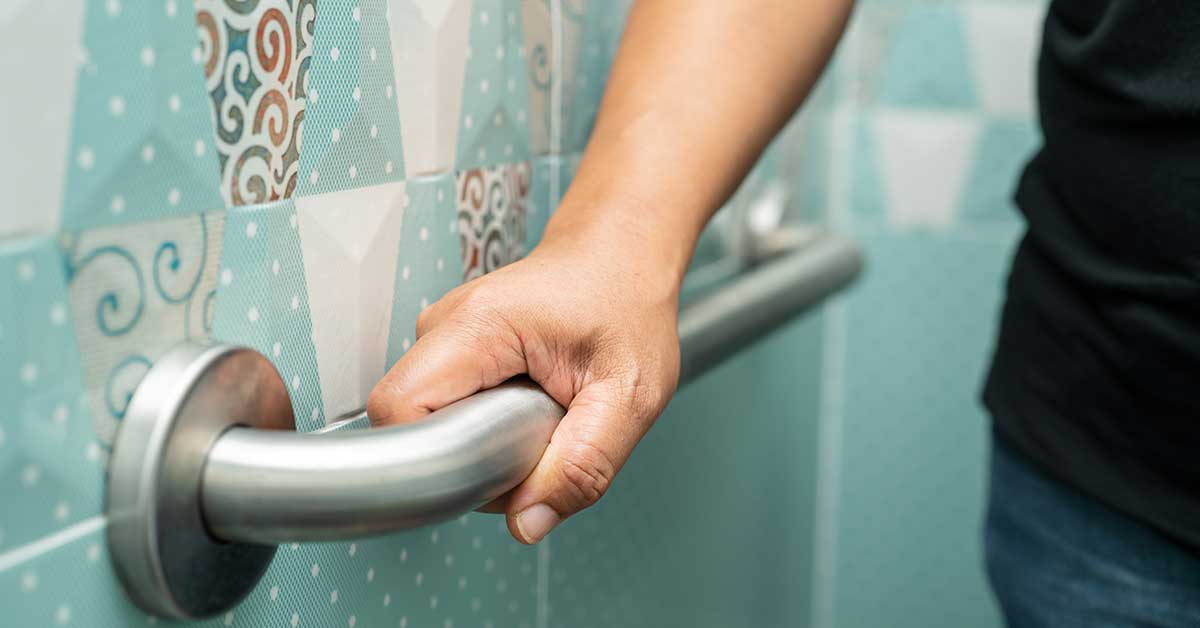
If you only install one thing, make it grab bars, not the flimsy suction-cup kind that big-box stores love to push as an easy solution. Those are decorations, not safety equipment.
In my experience, the biggest mistake families make is thinking one grab bar by the tub is enough. It’s not. Most seniors and disabled adults need a system of grab bars: one by the toilet, one at the shower entrance, and one or two inside the shower or tub. When I walk into a bathroom and see a towel bar being used for leverage, I mentally start the countdown clock to the next fall. Towel bars are designed to hold a hand towel, not 180 pounds of shifting body weight.
From a technical standpoint, properly installed grab bars are anchored to wall studs or supported by appropriate wall anchors rated to support at least 250-300 pounds. They should be installed horizontally or at a slight angle when pushing up from a seated position (like next to the toilet or shower chair), and vertically near entry points for steadying during step-in and step-out. According to ADA-inspired guidelines, bars are typically mounted between 33 and 36 inches from the floor, but the height should be personalized to the user’s reach and balance.
In one home I assessed, the daughter proudly showed me a beautiful, hotel-style bathroom renovation shed done for her 78-year-old mother. Marble tile, frameless glass, rainfall shower head, the works. But there wasn’t a single grab bar. Her mother had already fallen twice, using the glass door for support. We ended up retrofitting three grab bars into that perfect bathroom. It still looked great, but now it wasn’t a trap.
Insider Tip From a Home Accessibility Contractor
Treat grab bars like seat belts. You hope you never need them in an emergency, but you use them every day so that when you do need them, they’re there without thinking.
Don’t worry that grab bars will make the bathroom look institutional. There are now designer grab bars that double as towel racks, shelves, or even toilet paper holders while still being weight-rated. When I recommend them to families who care deeply about aesthetics, they’re usually shocked at how subtle they can be.
For seniors and disabled adults who are already dealing with age-related mobility decline or independent living challenges, grab bars are the difference between managed risk and wishful thinking. If you’re planning broader home accessibility solutions, start with the bathroom and start with the bars.
2. Non-Slip Surfaces
If grab bars are your seat belts, non-slip surfaces are your brakes. Without them, you’re relying on luck and friction, and water is a ruthless enemy of both.
The numbers are stark. A study in the Journal of Safety Research found that the majority of bathroom injuries in older adults are related to slips and falls in or near the tub or shower. Smooth tile, polished stone, and acrylic tubs become skating rinks with a thin layer of soap and water. I’ve seen people with perfectly good balance go down hard on a wet bathroom floor; add neuropathy, arthritis, or muscle weakness, and it’s not a matter of if but when.
Most families think tossing down a cheap bath mat fixes the problem. It doesn’t. Those fluffy, loose rugs are trip hazards, especially for walkers and canes. The better approach is layered:
- Inside the tub or shower: use a high-quality, non-slip mat with strong suction cups, or, better yet, apply a non-slip coating directly to the surface. Commercial-grade, clear anti-slip treatments can increase traction without changing the look of the tub.
- Outside the shower and around the sink: use low-profile, rubber-backed mats that grip the floor and won’t bunch up. If mobility devices are used, look for beveled edges to prevent the wheels or tips from catching.
- Flooring choice: if you’re renovating, skip the glossy porcelain and choose textured tile or vinyl with a high slip-resistance rating (often indicated as a higher coefficient of friction).
In one client’s home, the son had installed a beautiful, dark, glossy tile floor because it hides dirt. It also hid water and soap residue. His 82-year-old father fell twice in three months. We swapped the slick tiles for a textured LVT (luxury vinyl tile) rated for wet areas and added anti-slip strips inside the shower. No more falls in the next 18 months I followed that family.
Insider Tip From an Occupational Therapist
If I can slide across your bathroom floor in socks, its too slippery for a senior. Test it yourself if it feels dicey to you, its dangerous for them.
Non-slip surfaces also matter for those dealing with aging-related incontinence. Urine on the floor near the toilet is not just a hygiene issue; it’s a slip hazard. Pair non-slip flooring with easy-clean materials and consider accessible incontinence supplies or specialty incontinence products to reduce nighttime bathroom rushes and accidents.
This is where home improvement intersects directly with daily living challenges. You’re not just making the bathroom look nicer; you’re engineering friction exactly where it’s needed most.
3. Shower Chairs
A shower chair is not a sign of weakness; it’s a strategy for staying independent longer. I’ve lost count of how many older adults told me, “I’m afraid to shower because I feel like I might fall.” That fear leads to less frequent bathing, which leads to skin issues, infections, and a quiet loss of dignity. A simple, properly chosen shower chair changes the entire equation.
The key word there is properly chosen. Not all shower chairs are equal, and this is where I see a lot of waste. Families grab the cheapest plastic stool they can find, only to discover it wobbles, doesn’t fit the tub, or doesn’t have a backrest for support. For seniors with balance issues, neuropathy, or fatigue, a sturdy, height-adjustable chair with a back and armrests is usually worth the extra cost. For those with more severe mobility limitations or paralysis, a transfer bench that extends beyond the tub edge allows sit-and-slide entry rather than stepping over.
In my own family, a shower bench turned my grandfather’s bathing from a 45-minute, exhausting ordeal into a 15-minute routine he could mostly manage himself. Before the chair, he’d avoid showers because it’s too much work, and I get dizzy. Afterward, he could sit, rest as needed, and use a handheld shower head (we’ll get to that) to control the process. It didn’t just make him safer; it made him feel like he had his life back.
Insider Tip From a DME (Durable Medical Equipment) Specialist
Measure the tub or shower and the user. The chair should fit the space without rocking, and the users feet must be flat on the floor with knees at roughly 90 degrees when seated.
Look for these features when choosing a shower chair or bench:
- Non-slip feet that grip wet surfaces
- Drainage holes in the seat to prevent pooling water
- Corrosion-resistant materials (aluminum, high-quality plastic)
- Weight capacity is clearly labeled and appropriate for the user
- Adjustable height to match user’s leg length and shower configuration
For people managing home accessibility on a budget, a good shower chair is one of the highest-return investments you can make. It directly reduces fall risk, conserves energy, and makes it more realistic for someone to truly age in place rather than bounce between hospital and rehab.
And here’s the surprising thing: once installed, many seniors tell me they wish they’d had one years earlier, even before their mobility changed. Sitting to shower is simply more comfortable and less tiring, regardless of age.
4. Handheld Shower Heads
If grab bars keep you upright and shower chairs let you rest, handheld shower heads give you control. For seniors and disabled adults living at home, that control is everything.
Fixed overhead shower heads force people to twist, lean, and reach, exactly the movements that trigger falls. A handheld showerhead, especially one mounted on a vertical sliding bar, allows the user (or caregiver) to direct water where it’s needed without awkward body positions. This matters not just for safety, but also for hygiene. When someone is seated on a shower chair, a fixed head often can’t effectively reach the lower extremities or the back.
I remember one client, a retired mechanic with limited shoulder mobility and early Parkinson’s. He’d stopped washing his feet regularly because he couldn’t safely bend or balance. Once we installed a handheld shower head with a long hose and an easy-grip handle, he could wash thoroughly while seated. His podiatrist later commented that his skin condition and risk of infection had dramatically improved because the plumbing finally matched his physical reality.
Insider Tip From a Physical Therapist
Pair a handheld shower head with a slide bar that’s also rated as a grab bar. That way you’re not just adding convenience you’re adding another point of stability in the shower.
Look for these features in a senior-friendly handheld shower head:
- Lightweight design with a large, easy-grip handle
- Long, flexible hose (usually 60-72 inches) to reach while seated
- Simple controls with large, easy-to-turn dials or buttons
- Pause or low-flow function to reduce water use and help with temperature control
- Anti-scald technology (or pair with a thermostatic mixing valve)
Temperature control is often overlooked. Many older adults have reduced temperature sensitivity, which increases the risk of burns. According to Harvard Health Publishing, water at 140°F can cause a serious burn in five seconds. Combining a handheld shower head with an anti-scald valve or thermostatic control is one of the simplest ways to reduce this risk.
Handheld shower heads also make life easier for caregivers. Instead of awkwardly maneuvering a frail person under a fixed stream, they can keep the person mostly covered and warm while washing one area at a time. For families managing daily living challenges, this can be the difference between dreading bath day and handling it with relative calm.
When you think about home accessibility solutions, don’t just think ramps and stair lifts. Think about the small, daily tasks like showering that either support independence or chip away at it. A $50-$150 handheld shower head, installed thoughtfully, is one of the quiet heroes of aging in place.
5. Raised Toilet Seats
Toilets are deceptively dangerous. They look harmless, but the sit-down and stand-up motions are among the most demanding for older adults, especially those with arthritis, joint replacements, or muscle weakness. A raised toilet seat turns that deep, painful squat into a manageable, controlled motion.
Standard toilet heights are usually around 14-15 inches from floor to seat. For many seniors and disabled adults, that’s simply too low. Comfort-height or chair-height toilets raise it to about 17-19 inches, which aligns more closely with a standard chair. But you don’t always need to replace the whole toilet; a well-chosen raised seat or toilet safety frame can achieve a similar effect at a fraction of the cost.
In one case, a client’s father had started using the sink for leverage to stand from the toilet. The sink wasn’t designed for that load and was slowly pulling away from the wall. He’d already had one near-fall when the sink shifted. We installed a locking raised toilet seat with armrests and added a grab bar on the adjacent wall. The sink went back to being a sink, and the toilet became a safe transfer point instead of a daily gamble.
Insider Tip From a Home Safety Assessor
If you hear grunting, see someone rocking forward multiple times, or notice them grabbing unstable surfaces to stand from the toilet, the seat is too low and you’re overdue for an upgrade.
When considering raised toilet options, think through:
- Clip-on/locking raised seats: attach to the existing bowl to add 26 inches of height. Look for secure locking mechanisms to prevent wobble.
- Toilet safety frames: freestanding or bolted frames with armrests around the toilet, offering leverage for sitting and standing.
- Tall/comfort-height toilets: best for renovations; they look like standard fixtures but are built taller from the ground up.
For individuals dealing with aging-related incontinence, getting on and off the toilet quickly and safely is crucial. If it’s difficult or painful, they’re more likely to delay going, increasing accidents and reliance on incontinence supplies. A raised seat isn’t just about comfort; it’s about maintaining dignity, autonomy, and realistic independent living.
From an engineering standpoint, the goal is simple: reduce the angle of hip and knee flexion required and shorten the distance the body has to travel. From a human standpoint, the impact is profound. Ive had more than one older adult tell me, only half joking, that the new toilet seat gave me my confidence back.
Pulling It All Together: A Bathroom That Actually Supports Aging in Place
You cant wish a bathroom into being safe. You build it, modification by modification, based on the real physical needs of the person who uses it. The 5 essential bathroom safety modifications for seniors and disabled adults living at home grab bars, non-slip surfaces, shower chairs, handheld shower heads, and raised toilet seats are the backbone of that design.
What Ive learned, walking through countless homes, is that safety and dignity are not opposing goals. When done right, these modifications don’t make a bathroom feel like a hospital; they make it feel thoughtful. A grab bar becomes a sleek rail that just happens to hold your weight. A shower chair blends into a modern, walk-in shower. A handheld shower head feels like a luxury upgrade, not a medical device. A raised toilet seat looks like a smart design choice rather than an afterthought.
If you or a loved one is committed to aging in place, the bathroom is your proving ground. Its where home accessibility either works in real life or fails at the worst possible moment. Falls in the bathroom don’t just bruise hips; they shatter confidence. And once that confidence is gone, independence isnt far behind.
So here’s the hard-nosed conclusion:
If your bathroom doesn’t have:
- Securely installed grab bars in the right places
- Non-slip surfaces inside and outside the shower
- A stable, well-fitted shower chair or bench
- An easy-to-use handheld shower head
- A properly sized raised toilet seat or comfort-height toilet
then its not a senior-friendly bathroom, no matter how pretty the tile is.
The upside? These changes are achievable. You don’t always need a full remodel. Many of these modifications can be done in a weekend with the right equipment and guidance, especially when coordinated with a professional familiar with home accessibility solutions. The cost of doing them now is almost always lower than the financial and human costs of a single serious fall.
According to recent research summarized by the National Institute on Aging, up to one-third of falls in older adults are preventable with environmental modifications and behavior changes. The bathroom is where those environmental changes pay off most clearly.
If you’re ready to turn your bathroom from a hidden hazard into a true support system for independent living, start with these five essentials. Don’t wait for a fall to prove you should have acted sooner. In the quiet, everyday routines of bathing and toileting, safety isn’t dramatic, but it’s exactly what keeps seniors and disabled adults living at home on their terms, not on the terms of an unsafe room.